
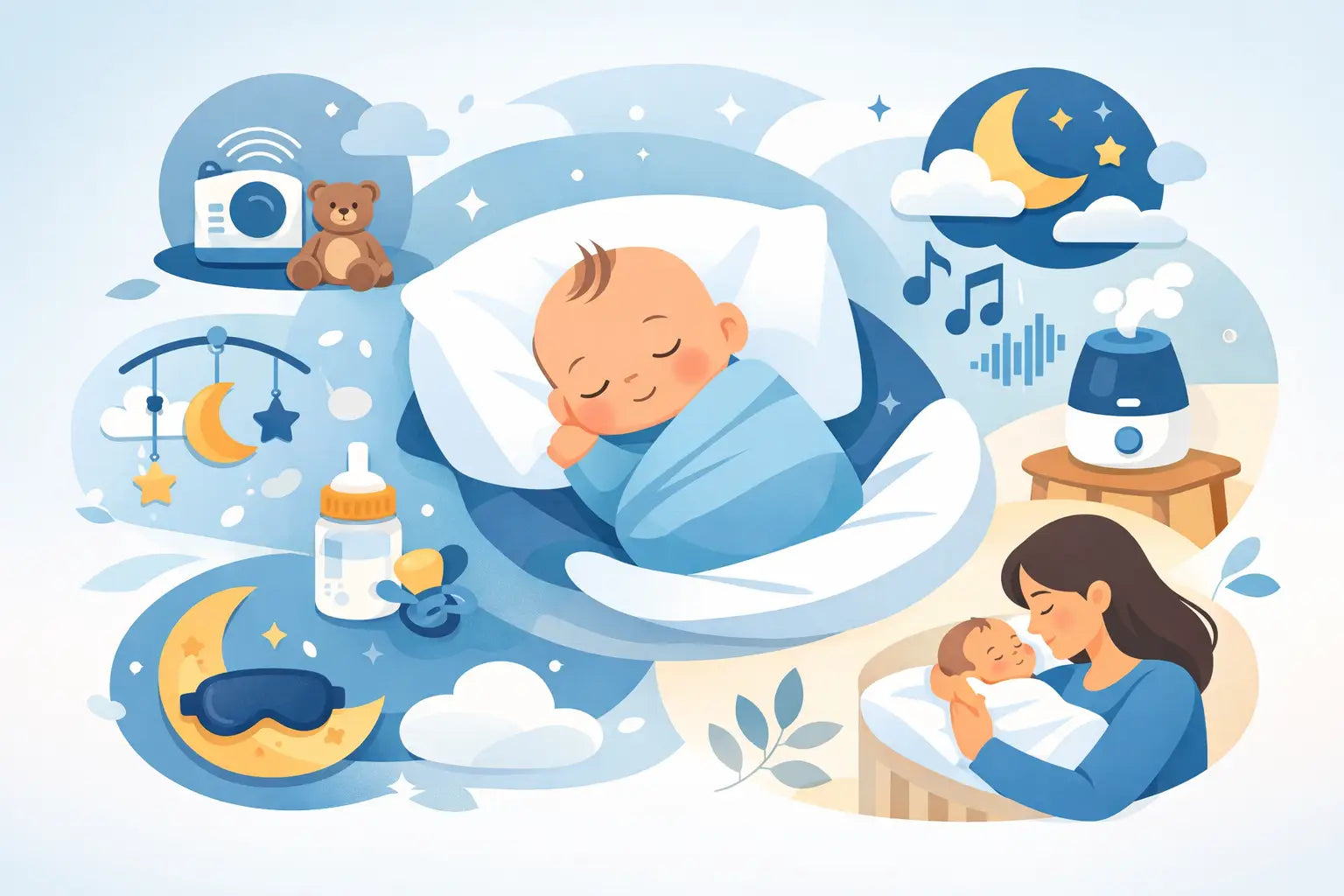
The 2 a.m. version of shopping for baby gear is dangerous. Everything claims to soothe. Everything promises better sleep. And when you are holding a wide-awake newborn who clearly disagrees, every product starts to sound tempting.
Here is the cleaner answer: the best baby sleep aid for newborns is rarely one miracle item. It is usually a small setup of safe, simple supports that work together - comfort, consistency, and a sleep space that does not fight your baby’s biology.
Newborn sleep is messy by design. They wake often, feed often, and do not know day from night yet. That does not mean sleep is hopeless. It means the goal is not perfect nights. The goal is fewer disruptions, easier settling, and a routine that feels calmer for both baby and parent.
What counts as a baby sleep aid for newborns?
A baby sleep aid for newborns can be a product, but it can also be an environment or habit that makes sleep easier without adding risk. That distinction matters.
For a newborn, useful sleep aids tend to fall into a few categories: swaddles, white noise machines, blackout curtains, pacifiers, and bedtime routines that reduce stimulation. These do not force sleep. They support it. That is a better standard.
The best options are the ones that lower friction. Less startling. Less light. Less noise from the hallway. Less guesswork for tired parents. Smart choices, not clutter.
Why newborns struggle with sleep in the first place
If your baby sleeps in short stretches, that is normal. Newborn stomachs are small, circadian rhythms are immature, and their startle reflex is strong. They are adjusting to a much louder, brighter world.
That is why the most effective sleep aids for this stage are simple and sensory. A snug swaddle can reduce sudden arm movements. White noise can soften household sounds and mimic the constant whoosh babies heard before birth. A dim room helps signal that this stretch is for rest, not play.
It depends on the baby, though. Some newborns relax instantly with white noise and still hate being swaddled. Others settle with a pacifier but wake the second it falls out. Parents often do better when they stop chasing the "best" item and start building the right combination.
The baby sleep aids that usually help most
Swaddles for the startle reflex
Swaddling works because newborns are not very good at staying asleep through their own reflexes. They jerk, flail, and wake themselves up. A well-fitted swaddle can make sleep feel more contained and secure.
The trade-off is that not every baby likes being wrapped, and swaddling only works when it is done safely. The fabric should be snug around the arms but not tight at the hips, and once a baby shows signs of rolling, swaddling needs to stop. For the true newborn stage, though, it is often one of the most useful tools.
White noise machines for a steadier sleep space
A white noise machine is one of the few sleep products that earns its spot in many homes. It helps mask door clicks, barking dogs, and the normal sounds of a busy household. It also creates consistency, which matters more than parents sometimes realize.
Use it at a moderate volume and keep it away from the crib. Louder is not better. The point is a gentle, steady background sound, not a sensory blast. If your baby seems calmer during naps and nighttime with it on, that is a good sign it is helping.
Pacifiers for soothing
Pacifiers can be a strong newborn sleep aid because sucking is naturally calming. Some babies settle faster with one, and some are more likely to drift back to sleep after a feed when they have that extra soothing cue.
Still, pacifiers are not universal. Some newborns spit them out immediately. Some parents do not want to introduce one right away, especially while feeding is still getting established. This is one of those areas where practicality wins. If it helps and fits your routine, great. If it turns into a game of replacing it every 20 minutes, it may not be worth it yet.
Blackout curtains for day-night learning
Newborns do not arrive knowing that nighttime is for longer sleep. Light exposure helps teach that over time. During the day, natural light and normal activity are helpful. At night, a darker room can reduce stimulation and make it easier to settle after feeds.
Blackout curtains are more useful than they sound, especially for summer evenings, early sunrises, or daytime naps in bright rooms. They will not transform a newborn into a 12-hour sleeper, but they can remove one more thing working against rest.
What to skip, even if the marketing sounds great
This is where tired parents need the clearest filter. Some products are marketed as sleep solutions when they are really just expensive distractions.
Positioners, crib wedges, loose blankets, pillows, and heavily padded sleep surfaces should stay out of a newborn’s sleep space. The same goes for toys or plush items in the crib. If a product adds softness, props baby into a specific position, or creates extra layers in the crib, it is not a smart shortcut.
Motion can also be a gray area. Some babies calm beautifully in a swing or rocker, but those are not the same as a flat, firm sleep surface. Falling asleep there is common. Staying there for ongoing sleep is not the safest choice. Convenience matters, but safety sets the line.
How to build a sleep setup that actually works
The most effective sleep setup is usually boring in the best way. A firm crib or bassinet mattress. A fitted sheet. A wearable swaddle or sleep sack if age-appropriate. Low light. White noise. That is enough.
From there, consistency does the heavy lifting. Newborn routines do not need to be elaborate. A diaper change, a feed, a brief cuddle, dim lights, then into the bassinet. Repeat the same sequence often enough, and your baby starts to recognize the pattern.
That matters because babies are cue-driven. A product may help them feel comfortable, but a rhythm helps them understand what happens next. That is often the real upgrade.
A realistic routine for using a baby sleep aid for newborns
If you are trying to make a baby sleep aid for newborns actually useful, timing matters as much as the product itself. Turn on white noise before the room gets noisy. Swaddle before baby gets overtired and frantic. Dim the room before the last part of the feeding, not after they are already wide awake again.
Watch for early sleepy cues like staring off, yawning, or fussiness that ramps up slowly. Waiting too long can make even the best setup less effective. Overtired newborns are harder to settle, not easier.
This is also why fewer, better products usually beat a pile of gadgets. One baby may respond well to a swaddle and sound machine. Another may need darkness and a pacifier more than anything else. Precision selection works better than trying everything at once.
When sleep aids are not the real issue
Sometimes the problem is not the sleep setup. It is gas, reflux, cluster feeding, temperature, or a baby who simply needs more support right now. Newborns are changing fast, and what worked last week may stop working this week.
That does not mean you chose the wrong product. It may just mean your baby’s needs shifted. If a newborn is especially hard to settle, seems uncomfortable after feeds, or sleep suddenly changes in a way that feels off, a pediatrician can help rule out issues beyond routine and environment.
Parents also need to hear this plainly: no sleep aid should create pressure to "fix" a normal newborn. Better sleep is a worthy goal. Perfection is not. Some nights will still be short and uneven, even with a strong setup.
Choosing smarter, not buying more
If you are shopping for sleep support, think in layers. Start with the essentials that improve the environment first. A safe sleep space, a quality swaddle, and a dependable white noise machine usually give you more value than novelty items with big promises.
Look for products that simplify your routine, not ones that add decisions. Easy to use in the dark. Easy to wash. Easy to repeat every night. The best baby buys are the ones that earn their place because they make life easier at 1 p.m. and 1 a.m.
For parents who want fewer tabs open and a more edited way to shop, that is the appeal of a curated store like Zavira - practical upgrades, less noise, and products chosen for real life.
The newborn stage is short, even when the nights feel long. Pick the sleep aids that make your space calmer, your routine simpler, and your next bedtime a little easier to face.
Share:
Best Diaper Bag With Compartments
7 Bedroom Humidifier Benefits That Matter