
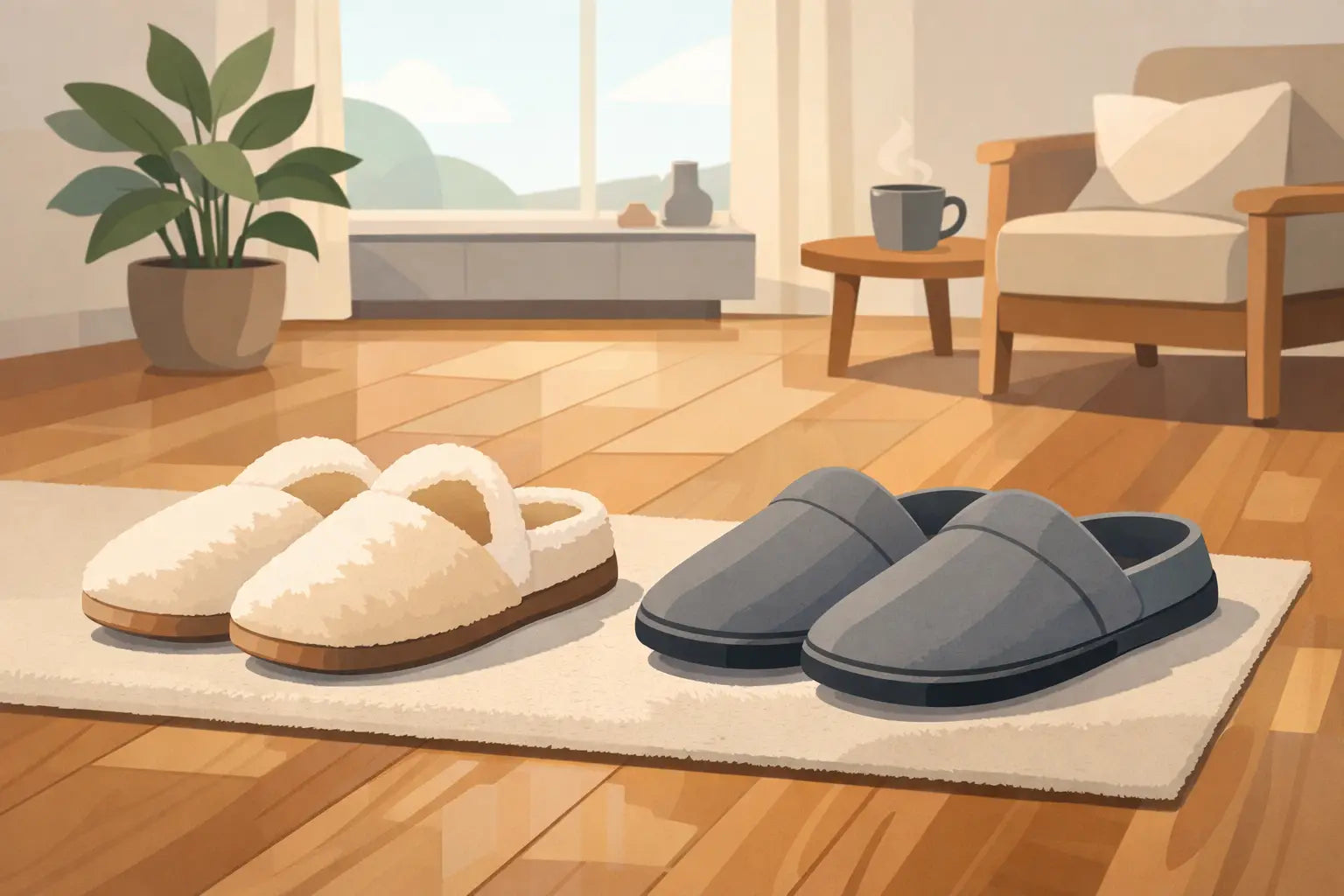
Cold hardwood has a way of making every early morning feel a little less inviting. The right slippers for hardwood floors change that fast - adding warmth underfoot, dependable traction, and a more put-together feel to your at-home routine.
This is not a category where softer is always better. A slipper can feel plush in the box and still slide across the kitchen, flatten after two weeks, or trap too much heat by noon. Smart home comfort starts with the details you actually notice: the sole, the lining, the fit, and whether the pair works for the way you move through your space.
What Makes Slippers Work on Hardwood Floors?
Hardwood floors need a slipper with grip, but not a heavy outdoor shoe disguised as one. The goal is stable movement from bedroom to kitchen to front door, without the stiff tread, noise, or bulk that makes a slipper feel like overkill.
Start with the outsole. A textured rubber or thermoplastic rubber sole is usually the strongest choice for smooth wood. It provides traction on dry floors and a little extra confidence around a spilled drink, damp entryway, or freshly mopped surface. Look for a flexible sole with visible texture rather than a completely smooth foam base.
The next factor is how the sole meets the floor. Hard, rigid rubber can feel secure, but it may sound loud on wood and make a lightweight slipper feel clunky. Softer rubber with a low-profile tread often strikes the better balance: quiet steps, natural movement, and enough grip for daily life.
A slipper should also stay on your foot. Backless slides are easy to step into, but they can shift as you turn corners or carry laundry. Closed-back styles and well-fitted moccasin slippers offer more stability, especially if your home has stairs, active kids, or a quick pace before work.
Choose a Sole That Fits Your Routine
There is no single best sole for every household. Your floor plan, comfort preference, and how often you step outside all matter.
A lightweight rubber sole is ideal for most apartments and homes with wood, laminate, or tile. It gives you everyday grip without making the slipper feel heavy. Choose this option if you want something simple, quiet, and easy to wear for hours.
Memory foam soles feel exceptionally soft at first, especially on firm flooring. The trade-off is longevity. Lower-density foam can compress quickly, leaving less support beneath the heel and ball of the foot. If cushioning is your priority, choose a slipper with memory foam on top of a supportive base rather than foam alone.
EVA foam soles are light, flexible, and often water-resistant. They work well for casual use and quick trips to the mailbox, though very smooth EVA may not grip as well as textured rubber. Check the bottom before you buy. Texture matters more than a product label.
For homes where slippers regularly go from indoors to the porch, driveway, or dog walk, a durable indoor-outdoor sole makes sense. It saves you from changing shoes for every small task. The trade-off is that these styles can carry outdoor dirt back onto clean hardwood, so reserve them for a pair you can wipe down easily.
The Best Slipper Style Depends on How You Live
A good pair should make your routine easier, not force you to adjust to it. Think about when you wear slippers and what happens between the first cup of coffee and the end of the day.
Closed-Back Slippers for More Stability
Closed-back slippers are the practical choice for people who move quickly around the house. The heel stays supported, which reduces slipping inside the shoe and helps the slipper feel more secure on stairs. They are also a strong pick for anyone who wants a more shoe-like fit without sacrificing indoor comfort.
Moccasin-style slippers often fall into this category. They pair a structured upper with soft lining and a flexible sole, creating a look that feels polished enough for answering the door or working from home. Choose a roomy toe box if you prefer socks, or a closer fit if you plan to wear them barefoot.
Open-Back Slippers for Easy On and Off
Slides and open-back slippers are made for convenience. Step in, make breakfast, settle onto the couch. They are especially appealing in warmer homes or for people who dislike anything pressing against the heel.
They do require more attention to fit. If the upper is too loose, your foot can slide forward and the sole can drag behind you. A broad, supportive footbed and a secure upper make a major difference, particularly on slick floors.
Bootie Slippers for Extra Warmth
When floors run cold all winter, ankle-height bootie slippers bring more insulation than a standard slip-on. They keep warmth around the ankle and can feel especially comfortable in drafty homes. The downside is heat buildup, so breathable lining is worth prioritizing if you tend to run warm.
Comfort Is More Than Plush Lining
Faux fur, fleece, sherpa, and knit linings all create a cozy first impression. But the material closest to your foot affects how the slipper wears over time.
Fleece and sherpa offer soft warmth and are great for cold-weather lounging. They can become too warm for all-day use, particularly in homes with central heating. A breathable cotton blend or moisture-wicking textile may be the smarter choice for year-round wear.
For support, look beyond the word “cushioned.” A contoured footbed, slight arch support, and heel padding help distribute pressure on hard flooring. This matters most if you stand while cooking, work from home, or tend to feel soreness in your heels after being barefoot.
If you have plantar fasciitis, sensitive joints, or a need for more structured support, slippers can help but should not be treated like medical footwear. Seek a pair with a firmer, shaped insole and a stable heel cup. Ultra-soft, flat slippers may feel good briefly while offering very little support over a full day.
Fit Tips That Prevent Slipping
Slippers should feel comfortably secure from day one. A little softness is expected as lining settles, but a loose slipper will not become more stable with wear.
Check that your heel does not lift excessively when you walk. In an open-back style, mild lift is normal, but your toes should not need to grip the footbed to keep the slipper on. In a closed-back style, your heel should sit naturally in place without rubbing at the back seam.
Sizing can vary by lining. Plush materials take up space initially, then compress. If you are between sizes, the right decision depends on construction: size up for a narrow or heavily lined closed-back slipper, but avoid sizing up too far in slides, where extra room can create instability. Always factor in whether you wear socks at home.
Keep Hardwood Floors and Slippers Looking Better
The best slippers for hardwood floors should protect the floor as well as your feet. Avoid pairs with rough exposed stitching, hard plastic pieces on the outsole, or soles that pick up grit easily. Tiny pebbles and trapped debris can leave marks over time, even on a durable finish.
Make a quick habit of checking the soles before walking through the house after stepping outside. A damp cloth removes most dust and dirt from rubber outsoles. For fabric uppers, follow the care label and allow slippers to air-dry fully after cleaning. Heat can damage adhesive, shrink certain materials, and flatten padding.
It also helps to keep one pair strictly indoors. That small boundary keeps floors cleaner, extends the life of the slipper, and preserves the calm of a well-kept home. Smart finds should work hard without adding another chore.
A Better Everyday Upgrade
The right pair is not about choosing the fluffiest option on the shelf. It is about finding a design with real grip, lasting comfort, and a style that feels right in your space. At Zavira, that is the standard: practical upgrades with a sharper point of view.
Choose slippers that support the way your home actually moves - quiet mornings, busy evenings, quick doorbell moments, and every step in between. Your hardwood floors set the tone. Your slippers should rise to it.
Share:
Tote Bag vs Backpack for Your Everyday Carry