
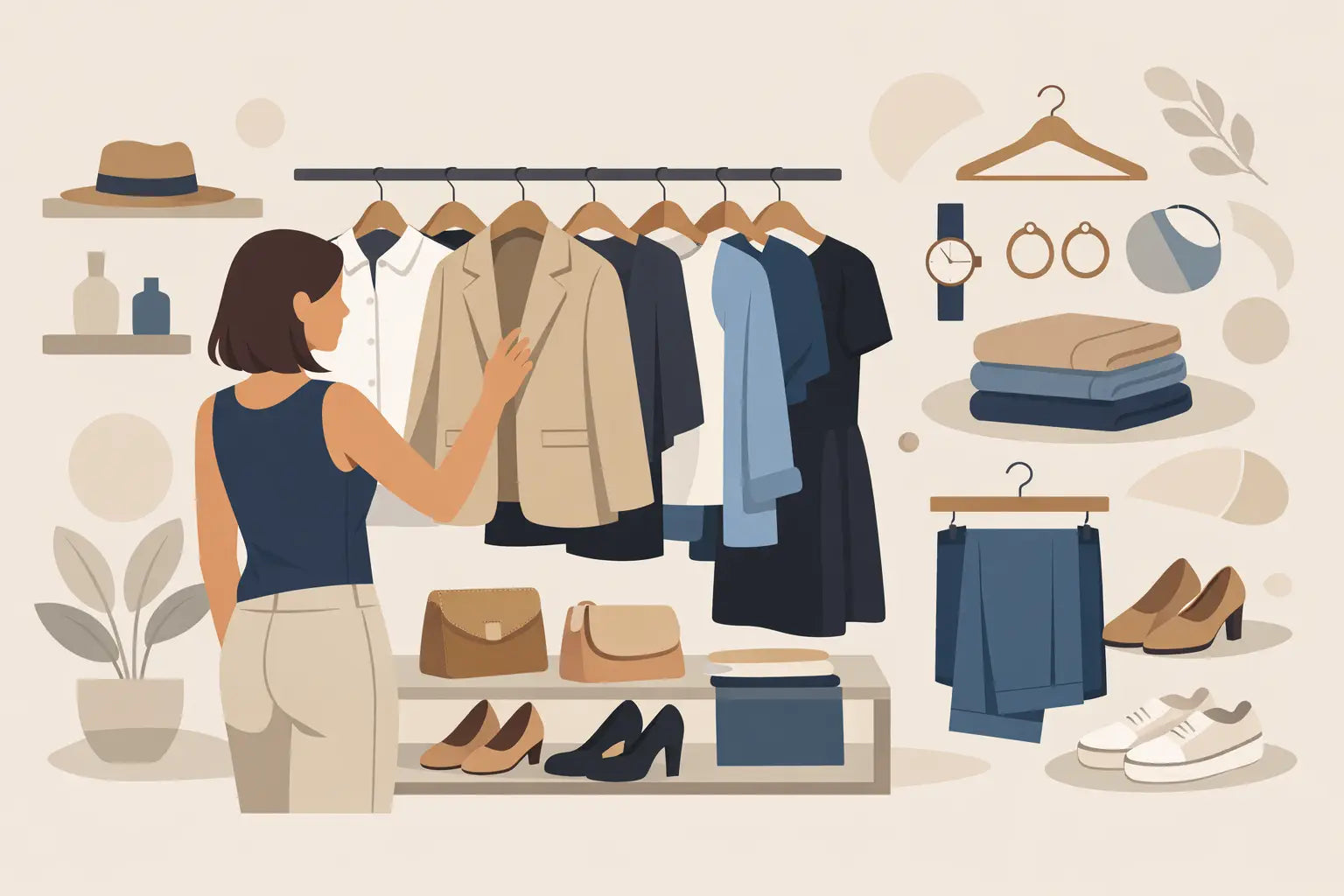
You do not need more clothes. You need better decisions.
That is the real answer to how to build a capsule wardrobe. Not a strict 10-piece formula. Not a closet full of beige basics that do not feel like you. A capsule wardrobe works when it makes getting dressed faster, sharper, and less wasteful - while still fitting your actual life.
If your closet is full but your outfits still feel repetitive, random, or hard to pull together, a capsule is not about owning less for the sake of it. It is about editing with purpose. Smart finds. Better wear. No clutter, no compromises.
What a capsule wardrobe really is
A capsule wardrobe is a small, intentional collection of clothing that mixes easily, covers your routine, and reflects your style. The key word is intentional. It is not about chasing a number. For one person, a capsule might be 25 pieces. For another, it might be 40 because work, parenting, weather, or lifestyle demands more range.
What matters is that every piece earns its place. You should be able to build multiple outfits from a limited set of items without feeling boxed in. Think fewer pieces, more combinations.
That also means a capsule should not feel like punishment. If you love color, your capsule can include color. If your week moves between office days, school pickup, workouts, and dinner plans, your closet has to support all of it. Minimalism only works when it is useful.
How to build a capsule wardrobe for your real life
Start with your calendar, not your mood board.
A lot of people build a wardrobe for the person they wish they dressed like. Then they wonder why half their clothes stay untouched. Before you sort a single hanger, look at your week honestly. How often do you get dressed for work, casual errands, social plans, travel, or home life? If 70 percent of your life is casual, your capsule should reflect that.
This is where most closet edits go wrong. They overinvest in fantasy pieces and underinvest in repeat-wear essentials.
Audit what you actually wear
Pull out the pieces you reach for on repeat. Not the expensive ones. Not the aspirational ones. The ones you wear, wash, and wear again. Those are your baseline.
Lay them out and look for patterns. You may notice that you always choose straight-leg denim over skinny fits, gold-toned accessories over silver, neutral sneakers over heels, or relaxed button-downs over structured tops. That is useful data. Your wardrobe is already telling you what works.
Then separate the rest into clear groups: keep, maybe, and remove. Keep the items that fit well, feel good, and work with multiple outfits. Maybe items are the ones you like but do not wear often. Remove anything uncomfortable, overly trend-driven, hard to style, or tied to an outdated version of your life.
Be honest here. A capsule wardrobe gets strong through editing.
Choose a color base that makes mixing easy
Most strong capsules have a tight color story. That does not mean boring. It means coordinated.
Start with two or three neutrals you wear often, such as black, white, cream, navy, gray, denim, camel, or olive. Then add one or two accent colors that feel like you. If everything can pair with at least three other pieces, getting dressed becomes simple.
If your closet is currently all over the place, this step will make the biggest difference fast. A focused palette cuts decision fatigue and helps new purchases work harder.
Build around categories, not shopping impulses
A capsule wardrobe is easiest to build when you think in roles. You need tops, bottoms, layers, shoes, and accessories that support your routine. The exact mix depends on your lifestyle and climate, but each category should pull real weight.
Your tops should include easy basics and a few elevated options. Think clean tees, tanks, knit tops, button-downs, or blouses you can dress up or down. Your bottoms should anchor the closet - jeans, trousers, skirts, or shorts that fit well and pair easily.
Layers matter more than people think. A great blazer, cardigan, denim jacket, or lightweight coat can change the feel of the same outfit instantly. Shoes should cover your actual needs, not just the versions of yourself you shop for. If you live in sneakers and flats, build from there. If your job needs polished footwear, prioritize that.
Accessories are where a capsule stays personal. A watch, a structured bag, sunglasses, or a simple fragrance can make a small wardrobe feel styled rather than stripped down.
The best capsule pieces do more than one job
When deciding what stays or what to buy, ask one question: can this piece work at least three ways?
A white shirt that pairs with jeans, tailored pants, and a skirt is useful. A blazer that works for work, dinner, and travel is useful. A bag that looks polished but carries daily essentials is useful. This is how a smaller wardrobe starts to feel bigger.
Single-use pieces are not forbidden. They just should not dominate your closet.
Fit and fabric matter more than quantity
If you are learning how to build a capsule wardrobe, this is the part worth slowing down for. A smaller closet makes quality more visible. When you own fewer pieces, bad fit gets worn less, and poor fabric gets old fast.
Prioritize clothes that hold shape, feel comfortable through a full day, and suit your routine. Cotton, denim, wool blends, quality knits, and structured materials usually outperform flimsy trend fabrics. The goal is not luxury for the sake of it. The goal is durability, repeat wear, and a cleaner look.
Fit is just as important. Tailoring can turn a good piece into a great one, especially for blazers, trousers, and dresses. If something almost works but constantly needs adjusting, it is probably not capsule-worthy.
Shop slower so the capsule stays sharp
Once you edit your closet, the next challenge is keeping it that way.
Do not refill the space with random deals or trend pieces that only work with one outfit. Shop with a short list. Focus on gaps. Maybe you need better everyday sneakers, a versatile crossbody bag, or a knit layer that works in over-air-conditioned offices and weekend errands.
This is where curation matters. Shopping should feel easier, not endless. A well-edited store like Zavira makes that process cleaner because the point is not more options. It is better options.
Use a simple filter before every purchase
Before you add anything to cart, run it through four checks. Does it fit your lifestyle? Does it match your color palette? Can you style it at least three ways? Will you want to wear it next season, not just this weekend?
If the answer is no to most of those, skip it. Even a good-looking item can be the wrong buy.
Price matters too, but value matters more. A piece you wear twice a week is usually a better purchase than a cheaper one that sits untouched.
Make room for seasons and real-life change
A capsule wardrobe is not static. It should flex.
Your summer capsule will not look exactly like your fall one. Your workwear needs may shift. Your body may change. You may move, travel more, become a parent, or go from office life to remote work. A strong capsule can evolve without becoming chaotic.
The easiest way to handle this is to keep your foundation steady and rotate seasonal pieces in and out. Your core jeans, layering pieces, bags, and go-to shoes may stay. Lighter fabrics, coats, boots, swimwear, or occasion pieces can shift based on season and need.
This keeps your closet practical without forcing you into a rigid system.
Common mistakes when building a capsule wardrobe
The biggest mistake is going too extreme too fast. If you purge everything and try to rebuild from scratch in one weekend, you usually end up rebuying basics in a panic. Edit in phases instead.
Another common mistake is buying only basics and forgetting personality. A capsule should be easy to style, but it should still feel like your style. Texture, shape, accessories, and a few standout pieces keep it from looking flat.
The third mistake is ignoring your daily routine. A beautiful wardrobe that does not support your life will always feel inconvenient. Convenience is part of style.
A smarter closet pays off daily
When your wardrobe is working, you feel it in small moments. Getting dressed takes less time. Packing gets easier. Shopping gets more intentional. You stop spending money on duplicates, almost-right pieces, and closet clutter that never earns a second wear.
That is the real benefit of learning how to build a capsule wardrobe. It is not about owning the least. It is about owning what works.
Start with what you wear most. Edit with honesty. Buy with purpose. The best wardrobe is not the biggest one - it is the one that makes everyday life look pulled together with less effort.
Share:
Capsule Wardrobe Example for Workweek
How to Choose a Diaper Bag That Works