
Dry skin in the morning. A stuffy bedroom at night. Dust floating in a sunbeam by the window. When you start looking for a fix, the humidifier vs air purifier question shows up fast - and the wrong choice can leave you with cleaner air that still feels dry, or more moisture with the same allergens still hanging around.
The better buy depends on what your home feels like, not just what sounds healthy on the box. One adds moisture to the air. The other removes particles from it. Simple distinction, big difference.
Humidifier vs air purifier: the core difference
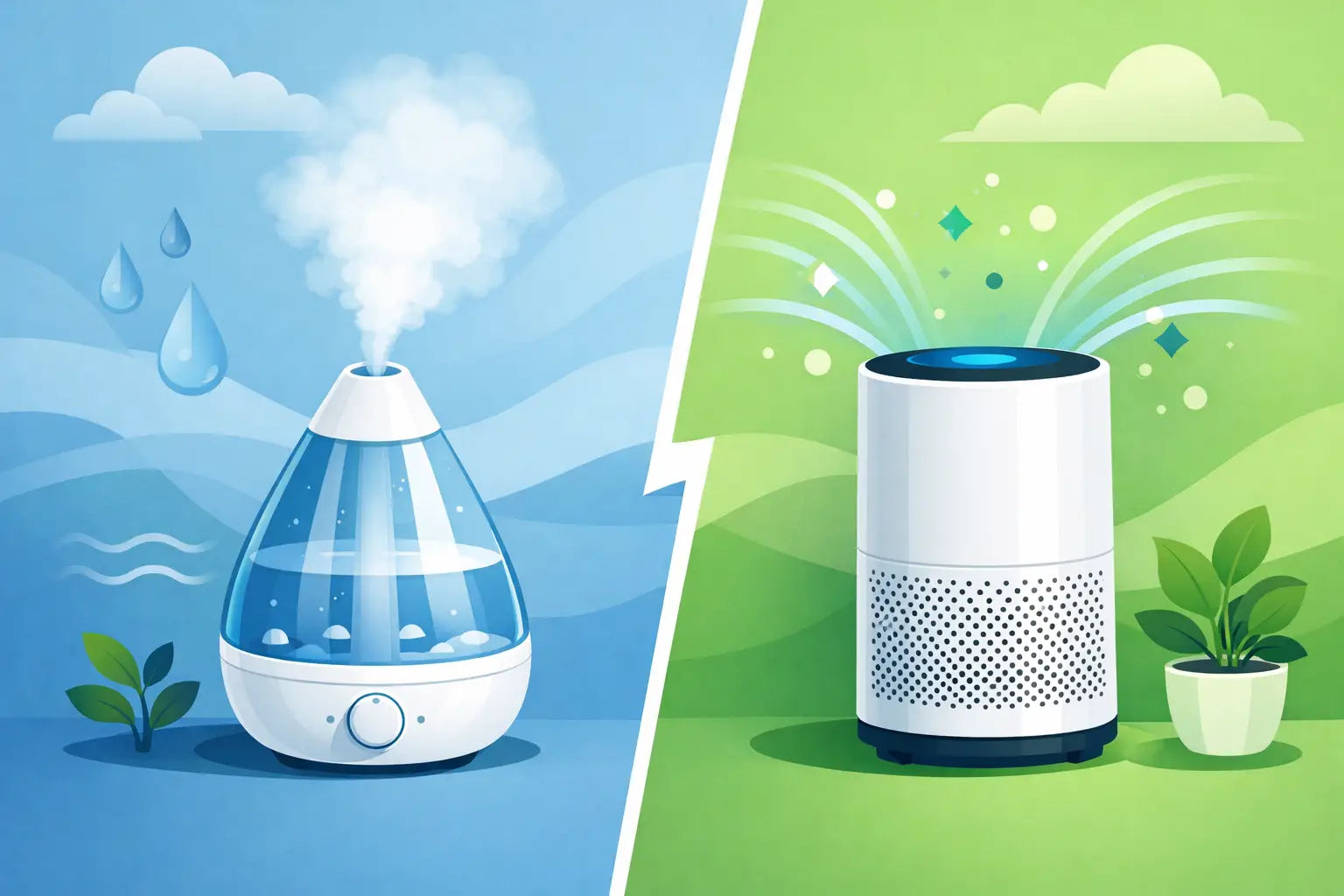
A humidifier increases humidity. It puts moisture back into dry indoor air, which can help if your skin feels tight, your throat gets scratchy, or your nose dries out when the heat is running.
An air purifier does the opposite kind of job. It does not add moisture. Instead, it pulls air through filters that capture particles like dust, pollen, pet dander, and in some models, smoke and odors.
That means these products solve different problems. If your home feels uncomfortably dry, an air purifier will not fix that. If your main issue is allergies or airborne particles, a humidifier will not remove them.
This is where many people overbuy, underbuy, or buy the wrong thing entirely. Smart shopping starts with the symptom.
What a humidifier is actually good for
Humidifiers work best when the air in your home is too dry. This happens often in winter, in air-conditioned spaces, and in climates where indoor heating strips moisture from the air.
If you wake up with dry lips, irritated sinuses, or a cough that feels worse at night, low humidity could be the reason. A humidifier can make a bedroom feel more comfortable, especially during sleep. Parents often use them in kids' rooms for that reason, and adults notice the same difference when indoor air starts feeling harsh.
There are trade-offs, though. Too much humidity can make a room feel sticky and may encourage mold or dust mites. A humidifier also needs regular cleaning. If it is neglected, it can spread minerals or bacteria back into the air, which defeats the point.
A humidifier makes sense when comfort is the problem. Think dry air, not dirty air.
What an air purifier is actually good for
Air purifiers are built for air quality. If your apartment collects dust fast, your allergies flare indoors, or pet hair seems to travel everywhere, this is usually the better tool.
Most strong models use a HEPA filter to trap small particles. That matters for common irritants like pollen, dust, mold spores, and dander. Some units also include activated carbon to reduce odors from cooking, pets, or smoke.
An air purifier is especially useful in bedrooms, nurseries, and living spaces where people spend long stretches of time. If your home is in a city, near traffic, or shared with pets, the benefits tend to be more noticeable.
But again, there is a limit. An air purifier cannot stop dry skin caused by low humidity. It also cannot magically fix poor cleaning habits or serious moisture issues in the home. It helps the air you breathe. It does not replace housekeeping, ventilation, or maintenance.
Which one is better for allergies?
If allergies are your main concern, an air purifier is usually the stronger choice.
That is because common allergy triggers are airborne particles. Pollen, dust, pet dander, and mold spores need to be captured or reduced, not moisturized. A purifier with a true HEPA filter is designed for exactly that.
A humidifier can help if dry air is irritating your nose and throat, which can feel similar to allergy symptoms. But it does not remove the trigger itself. In some cases, excess humidity can actually make allergies worse by creating a better environment for dust mites and mold.
So if you are choosing based on sneezing, congestion, or indoor triggers, cleaner air usually beats wetter air.
Which one is better for sleep?
It depends on what is disturbing your sleep.
If you are waking up with a dry nose, dry throat, or irritated skin, a humidifier may help you feel better overnight. Bedrooms often get drier than expected, especially with forced-air heat running for hours.
If your sleep is disrupted by allergies, pet dander, dust, or lingering odors, an air purifier may have the bigger impact. Cleaner air can mean fewer nighttime symptoms and a fresher-feeling room.
For some homes, both issues exist at once. A room can be dry and dusty. In that case, choosing one over the other is less about which is better overall and more about which problem is more urgent right now.
Humidifier vs air purifier for babies and kids
This is one of the most common shopping scenarios, and it is where simple answers matter.
For babies and kids, a humidifier is often used when a room feels dry or during seasons when indoor heat causes congestion and discomfort. It can make sleep more comfortable, especially when a child has a dry cough or irritated nasal passages.
An air purifier is often the better fit when the concern is allergens, dust, pet dander, or overall air freshness in the room. If a child has sensitivities or the nursery collects dust easily, a purifier can help reduce what is floating in the air.
The key is maintenance. Kids' spaces should stay clean, simple, and low-fuss. A poorly maintained humidifier can create more problems than it solves. A purifier needs filter replacements on schedule. Easy care matters as much as features.
Signs you should buy a humidifier
You likely need a humidifier if your home feels dry more than it feels dirty. Watch for tight skin, dry nasal passages, static electricity, cracked lips, or discomfort that gets worse when the heat or AC is on.
This is especially common in bedrooms during winter. If the room air feels thin and harsh, moisture may be the missing piece.
Signs you should buy an air purifier
You likely need an air purifier if your space feels dusty, stale, or irritating even when humidity seems normal. Frequent sneezing indoors, visible dust buildup, pet dander, odors that linger, or city pollution drifting in from outside are all solid clues.
If your goal is a cleaner-feeling room, this is usually the smarter pick.
When it makes sense to use both
Sometimes the humidifier vs air purifier decision is not either-or.
If you live in a dry climate, run heat often, and also deal with allergies or pets, both devices can play different roles in the same room. One keeps the air comfortable. The other keeps it cleaner.
That said, not everyone needs a two-device setup. If you are trying to shop smarter, start with the problem you notice most. Solve the biggest pain point first. Add the second only if your home still feels off.
That approach is more practical and usually more cost-effective.
What to look for before you buy
Skip the feature overload. Focus on fit.
For a humidifier, pay attention to room size, tank capacity, noise level, and how easy it is to clean. A sleek unit that is annoying to maintain will not stay in your routine for long.
For an air purifier, check room coverage, filter type, replacement schedule, and noise. If you want real particle removal, HEPA matters. If odors are part of the issue, carbon filtration helps.
Design counts too. These appliances live in your bedroom, nursery, or living room. They should work well, look clean, and earn their place in the space.
A good home setup is not about buying more. It is about choosing better.
The smarter choice for your space
If your air feels dry, choose a humidifier. If your air feels dirty, choose an air purifier. If it feels like both, start with the problem that affects your day the most.
That is the real answer to humidifier vs air purifier. Not hype. Not extra features. Just the right tool for the job.
Better living usually comes down to small upgrades that pull their weight. Cleaner air. More comfortable sleep. A home that feels easier to be in. Choose the device that solves your actual problem, and the difference tends to show up fast.
Share:
Review of Compact Ultrasonic Humidifiers
How to Choose a Baby Room Night Light