
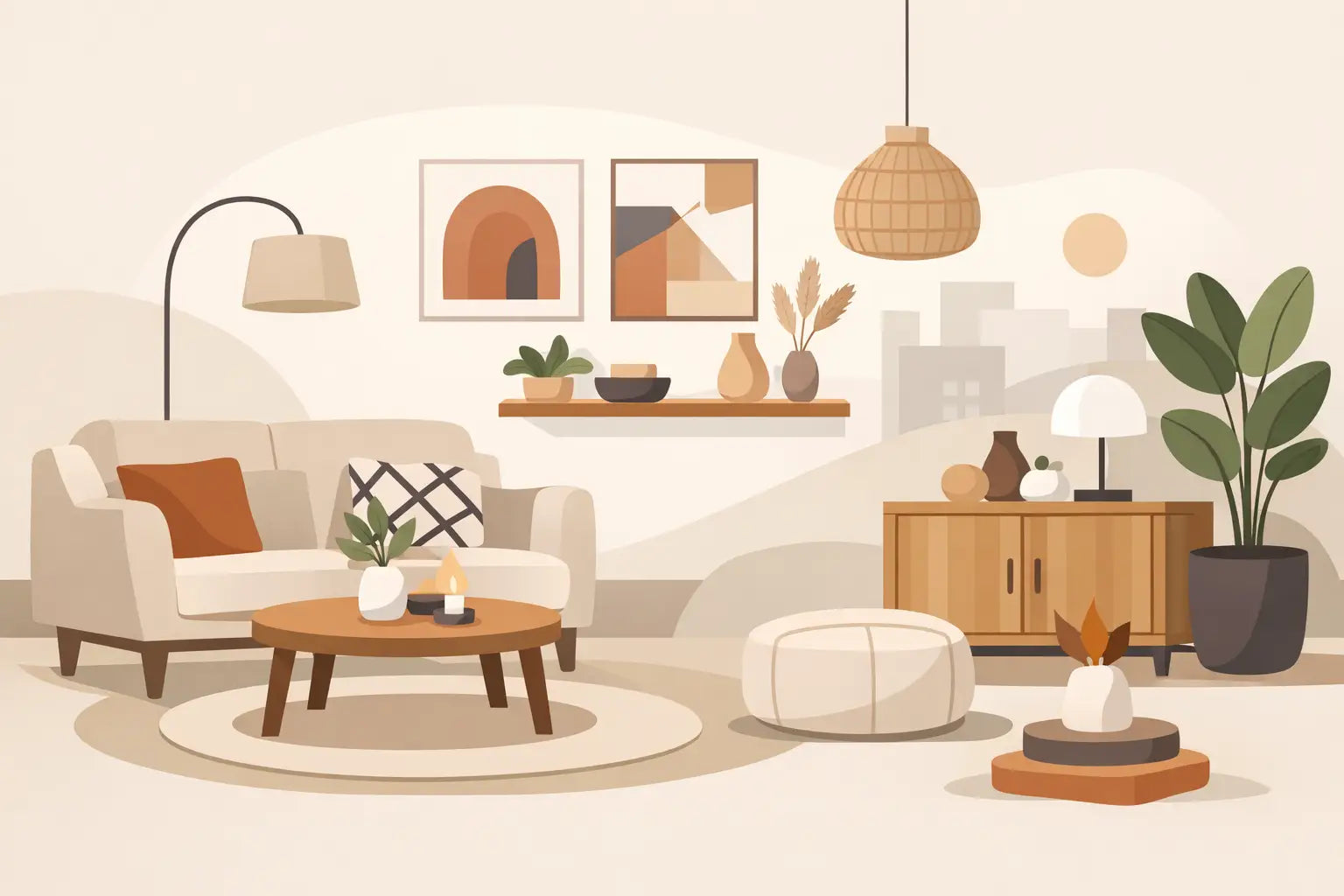
A modern home rarely looks expensive because of one big purchase. It looks pulled together because the room makes sense. The lines are clean. The color palette is controlled. The clutter is gone. That is good news if you want better style without a big spend.
Modern home decor on a budget is less about buying more and more about choosing better. A few smart upgrades can shift the whole feel of your space. Think edited, not empty. Functional, not flat. Stylish, but still livable.
What modern style actually looks like
A lot of people hear “modern” and picture cold rooms, all-white furniture, and spaces that feel off-limits. Real modern style is simpler than that. It leans on clean silhouettes, practical pieces, balanced color, and details that feel intentional.
That means a neutral sofa can feel modern, but so can a warm wood coffee table with a matte black lamp beside it. Texture matters. Contrast matters. Empty space matters too. If every surface is packed, even good decor starts to look random.
The easiest way to get the look is to build around three things: shape, color, and function. Choose furniture and decor with straightforward lines. Keep your palette tight. Make sure every piece either solves a problem, adds comfort, or improves the room visually. If it does none of the three, it is probably noise.
How to approach modern home decor on a budget
If your goal is to make your home feel more current, start by resisting the urge to redo everything at once. Full-room makeovers look exciting online, but they are usually the fastest route to overspending and second-guessing.
Work in layers instead. Begin with the biggest visual surfaces in the room, then move into accents. In most spaces, that means textiles first, lighting second, decor third. A new rug, better throw pillows, and more intentional lighting can do more for a room than a cart full of tiny accessories.
There is a trade-off here. Small decor items are cheaper upfront, so they feel like the safe choice. But too many low-impact pieces can leave a room looking busy rather than elevated. Spending a little more on fewer, better items often creates a cleaner result.
Start with the room’s visual anchors
Every room has a few pieces that set the tone. In a living room, it is usually the sofa, rug, coffee table, curtains, and lighting. In a bedroom, it is the bed, bedding, nightstands, and lamp setup. If those anchors feel mismatched, the room will too.
You do not need all new furniture. You need consistency. If your sofa is simple and structured, pair it with a rug in a subtle pattern rather than something overly ornate. If your dining table has warm wood tones, repeat that warmth elsewhere with frames, bowls, or shelving. Modern rooms feel calm because the choices connect.
Keep your palette tighter than you think
Budget decorating often goes off track with color. One trendy vase here, one bright throw there, one random print on the wall, and suddenly the room has no center. A modern look usually gets stronger when you edit the palette down.
A reliable formula is a base of neutrals, one grounding tone, and one accent. For example, cream, taupe, black, and muted olive. Or soft gray, white, natural wood, and rust. This does not mean every room has to look beige. It means the colors should feel related.
If you like bold color, use it in focused areas. A single statement pillow, a piece of wall art, or a sculptural object can do the job without taking over the room.
The highest-impact budget upgrades
Some home updates simply work harder than others. If you want a space to feel more modern quickly, focus on categories that change how the room reads at first glance.
Lighting is usually the most underrated. Swapping an outdated table lamp for one with a clean silhouette, linen shade, or matte finish instantly sharpens a space. Warm light also makes affordable decor look better. Harsh bulbs flatten everything.
Textiles are the next big win. Fresh pillow covers, a textured throw, new curtains, or upgraded bedding can reset the room without major effort. The trick is material and shape. Look for fabrics that feel substantial and colors that support the room instead of fighting it.
Decor accents come after that. A tray, mirror, vase, candle holder, or wall frame can elevate a space, but only if they are chosen with restraint. One oversized object often looks more modern than five small fillers.
Where to save and where to spend a little more
Not every category deserves the same budget. If you are decorating smart, some items should carry more weight than others.
Spend a little more on pieces you touch daily or see constantly. That includes bedding, bath essentials, rugs, and lighting. These affect comfort and atmosphere every day, so the payoff is real.
Save on trend-driven accents. Decorative bowls, tabletop styling pieces, faux stems, and seasonal refreshes do not need a premium price tag if the shape and finish are right. The same goes for smaller storage pieces that help reduce visible clutter.
It also depends on your stage of life. If you are in a first apartment, flexibility may matter more than permanence. If you are settling into a longer-term space, it makes more sense to invest in foundational pieces you will keep.
A modern home should still feel lived in
One of the easiest mistakes in budget decorating is copying a showroom too literally. Modern style is clean, but it should not feel sterile. A room needs softness and personality or it will look unfinished.
That is where texture earns its place. Think boucle, cotton, linen, ceramic, glass, wood, and matte metal. When your palette is simple, material contrast keeps the room interesting. A soft throw over a structured chair. A ceramic vase on a wood console. A smooth lamp beside woven storage.
Personal pieces matter too, just in a more edited way. A stack of books, a framed photo, or a favorite object can make the room feel real. The goal is not zero personality. The goal is no clutter, no compromises.
How to make each room feel more expensive
In the living room, focus on symmetry and scale. Two matching lamps or two balanced cushions can make a setup feel intentional fast. Make sure your rug is large enough to anchor the seating area. A rug that is too small makes the whole room feel cheaper.
In the bedroom, the fastest upgrade is layered bedding. Crisp sheets, a duvet or quilt, and two to three well-chosen accent pillows create a cleaner, more finished look than a pile of mismatched pillows ever will. Add a bedside lamp with a simple shape, and the room immediately feels more considered.
In the kitchen or dining area, counter clutter is usually the main problem. Clear what you can, then leave only the useful items that also look good. A fruit bowl, a cutting board, or a soap dispenser in a better finish can change the whole visual rhythm.
In entryways, keep it practical. A mirror, a tray, a small bench, or a catchall basket creates order. Modern design works best when it solves daily friction while keeping the space clean.
Shopping smarter beats shopping more
A budget does not limit style. Impulse does. The fastest way to waste money is to buy pieces that only look good on their own. Your home is not a product grid. Every item has to work with the room around it.
Before adding anything, ask three questions. Does it fit the palette? Does it improve function or atmosphere? Does it look intentional rather than trendy for trend’s sake? If the answer is no, skip it.
This is where curation matters. A more edited selection saves time, reduces bad buys, and makes decorating feel lighter. If you are shopping for home upgrades online, stores with a strong point of view often make modern decorating easier because the filtering is already done. Zavira leans into that idea with practical, design-forward home picks that help simplify the search.
The best budget rooms are built over time
You do not need a perfect room by next weekend. In fact, most polished homes were built piece by piece. The lamp came first. Then the rug. Then the throw that tied the sofa together. Then the tray that finally made the coffee table make sense.
That slower approach usually leads to better taste because it leaves room to notice what your space actually needs. Maybe it is warmth. Maybe it is storage. Maybe it is just fewer things with better shape.
Modern home decor on a budget works when you stop chasing the full makeover and start making sharper choices. Buy less, choose well, and let each upgrade earn its place. That is how a home starts to feel elevated - not all at once, but on purpose.
Share:
12 Best Kitchen Tools for Small Apartments
11 Long-Lasting Home Fragrance Ideas