
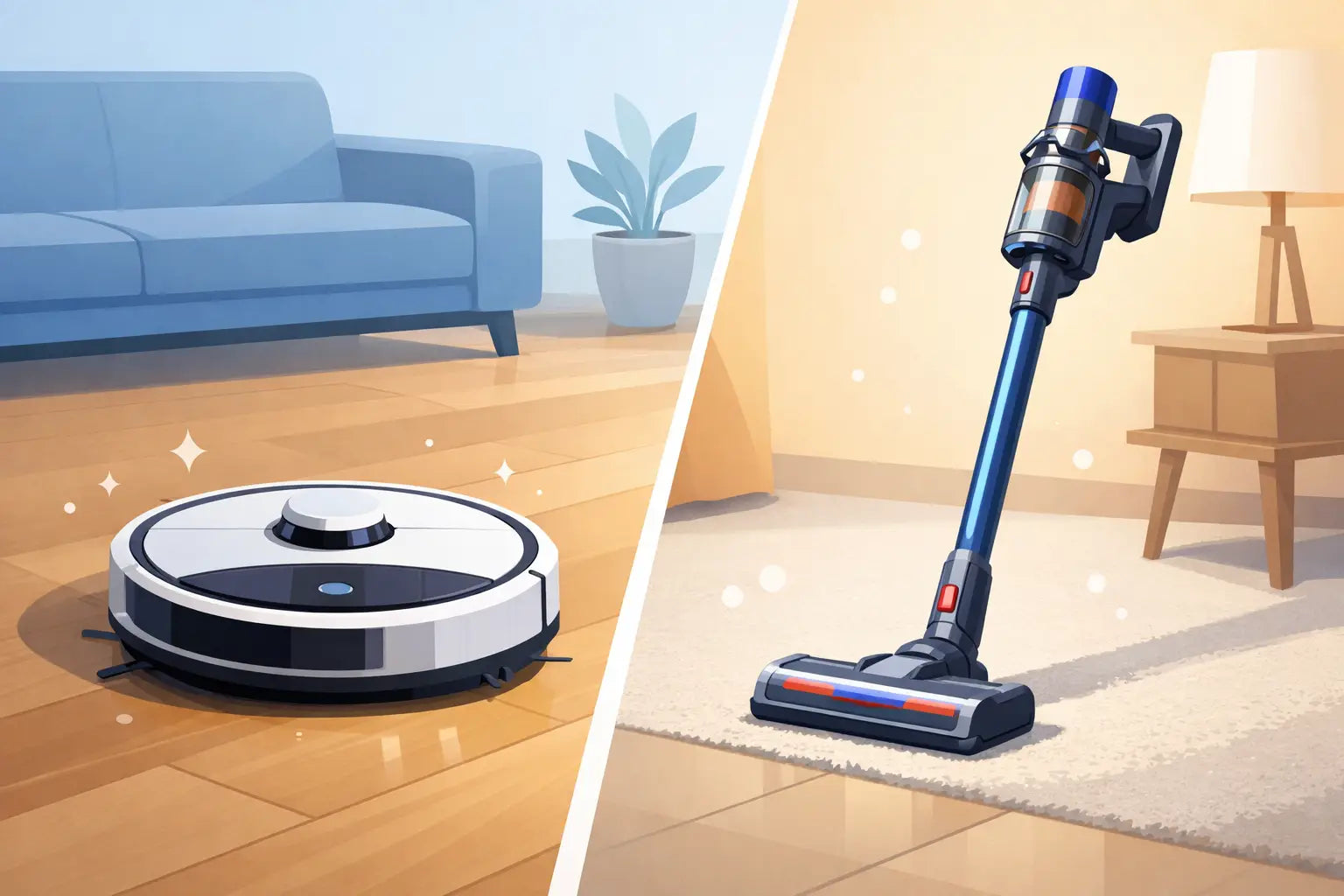
Some messes need a machine that works while you answer emails. Others need five focused minutes before guests arrive. That is the real question behind robot vacuum vs cordless vacuum: do you want hands-free upkeep, fast manual control, or a mix of both?
For most homes, this is not about which vacuum is better in a lab. It is about which one fits your rooms, your schedule, and your tolerance for clutter. Smart shopping starts there. No clutter, no compromises.
Robot vacuum vs cordless vacuum: the real difference
A robot vacuum is built for maintenance. It moves on its own, follows a schedule, and keeps everyday dust, crumbs, and pet hair from building up. The best part is obvious - it cleans when you are doing something else.
A cordless vacuum is built for intervention. You grab it, clean exactly what you see, and put it away. It is quick, direct, and usually better for stairs, upholstery, corners, and sudden messes.
That difference matters more than spec-sheet details. If your home gets lightly messy every day, a robot vacuum can reduce the background mess that makes a space feel unfinished. If your home gets concentrated messes in specific zones, a cordless vacuum often feels more useful because it responds instantly.
When a robot vacuum makes more sense
Robot vacuums are a strong fit for people who want cleaner floors without adding another task to the day. If you live in an apartment or a one-story home with mostly open floor space, the convenience can feel like a genuine upgrade.
They are especially useful for daily maintenance in homes with pets, kids, or high foot traffic. A robot vacuum will not replace every deep-cleaning job, but it can keep visible debris under control so your floors never get too far gone. That means less effort later.
The catch is simple. Robot vacuums prefer predictable spaces. They do best when furniture is easy to navigate, cords are off the floor, and rugs are not constantly shifting. If your rooms are crowded, your charging setup is awkward, or toys and cables are always in the way, the hands-free promise becomes less hands-free.
There is also the issue of edge cleaning and spot cleaning. Robot vacuums are better than they used to be, but they still may leave corners, tight gaps, or random trouble spots for you to finish manually.
Best homes for robot vacuums
A robot vacuum tends to shine in smaller homes, open-concept layouts, and spaces with hard floors or low-pile rugs. It also works well for busy households that value consistency over perfection. If your goal is to wake up to cleaner floors every morning, this category earns its place.
When a cordless vacuum is the better buy
Cordless vacuums are about control. You decide where to clean, how long to clean, and what deserves attention. That sounds basic, but in real life it is often the difference between ignoring a mess and fixing it immediately.
They are ideal for apartments with stairs, homes with mixed surfaces, and households that need more than floor cleaning. A cordless vacuum can move from kitchen crumbs to sofa cushions to car interiors without much friction. That flexibility is the selling point.
For many shoppers, cordless also feels more complete. You are not relying on navigation software, docking stations, or floor prep. You pull it out, clean the mess, and move on.
Battery life and bin size are the main trade-offs. A cordless model is great for quick sessions, but larger homes may require charging breaks or more frequent emptying. And while many premium options are powerful, lower-cost cordless vacuums can struggle with thicker carpet or heavy debris.
Best homes for cordless vacuums
Cordless vacuums work best in homes where messes are unpredictable and where people want fast access over automation. They are a smart choice for parents, pet owners, and anyone who values versatility. One tool. Multiple surfaces. Minimal effort.
Cleaning performance: automation vs power on demand
If your biggest concern is pure pickup performance, cordless vacuums usually have the edge. They let you target problem areas and often deliver stronger suction, especially on carpet, upholstery, and embedded debris.
Robot vacuums win a different category: frequency. A machine that runs four or five times a week can keep floors looking better than a more powerful vacuum that only comes out on weekends. So the right comparison is not just power versus power. It is power on demand versus cleaning on autopilot.
That is why the answer depends on your habits. If you actually use a cordless vacuum regularly, it can outperform a robot vacuum in practical results. If you tend to delay cleaning until it becomes annoying, a robot vacuum may keep your home in better shape simply because it runs without asking anything from you.
Convenience is not one-size-fits-all
Robot vacuums sell convenience through automation. Cordless vacuums sell convenience through speed. Both claims are true, but for different lifestyles.
A robot vacuum is convenient when your home supports it. Schedule it, let it run, empty it, repeat. In the right setup, it takes one recurring chore and shrinks it.
A cordless vacuum is convenient when life is messy in bursts. Spill in the kitchen. Dirt by the entryway. Crumbs under the high chair. You do not need mapping or scheduling for that. You need reach, speed, and simplicity.
If you want a vacuum that feels invisible in your routine, robot may be the better fit. If you want one that feels instantly useful, cordless often wins.
Cost, value, and what you are really paying for
Price matters, but value matters more. A robot vacuum often costs more upfront, especially if you want strong navigation, self-emptying features, or reliable app controls. What you are paying for is time savings and consistency.
A cordless vacuum can range from budget-friendly to premium, but even expensive models usually feel easier to justify because the use cases are obvious. Floors, stairs, furniture, car, quick cleanup. It does more types of work, even if it does not automate any of them.
Maintenance also looks different. Robot vacuums may need brush cleaning, sensor care, replacement parts, and the occasional rescue mission when something gets tangled. Cordless vacuums are mechanically simpler, though battery lifespan becomes part of the long-term value equation.
For value-conscious shoppers, the smarter question is not which category is cheaper. It is which category will actually get used. The best product is the one that fits your home well enough to earn a permanent place in your routine.
Should you choose one or both?
If your budget allows only one, choose based on your biggest friction point. If you hate routine floor maintenance, get the robot vacuum. If you hate being unable to clean a mess right now, get the cordless vacuum.
If your budget allows both, they can work surprisingly well as a pair. The robot handles daily upkeep. The cordless handles stairs, furniture, corners, and deeper touch-ups. Better together is not just a bundle idea here - it is how many efficient homes actually stay clean without constant effort.
That said, not every home needs both. In a small apartment with limited storage, a good cordless vacuum may be the smarter all-around pick. In a larger main-floor living space with pets and mostly hard flooring, a robot vacuum may deliver more daily value.
How to decide without overthinking it
Ask yourself three questions. What kind of mess happens most often? How tidy are your floors on a normal day? And do you want to clean less often, or clean faster?
If your answer is daily dust, pet hair, and low-level debris in relatively open spaces, robot is the stronger match. If your answer is spot messes, stairs, upholstery, and flexible whole-home cleaning, cordless is the better investment.
Good products should make everyday life easier, not more complicated. That is the standard. Shopping, but smarter.
The right vacuum is not the one with the most hype. It is the one that fits the way you actually live - and makes your home feel better with less effort tomorrow than it did today.
Share:
25 Smart Gifts for Her That Feel Elevated
A Smart Guide to Bundle Deals Shopping