
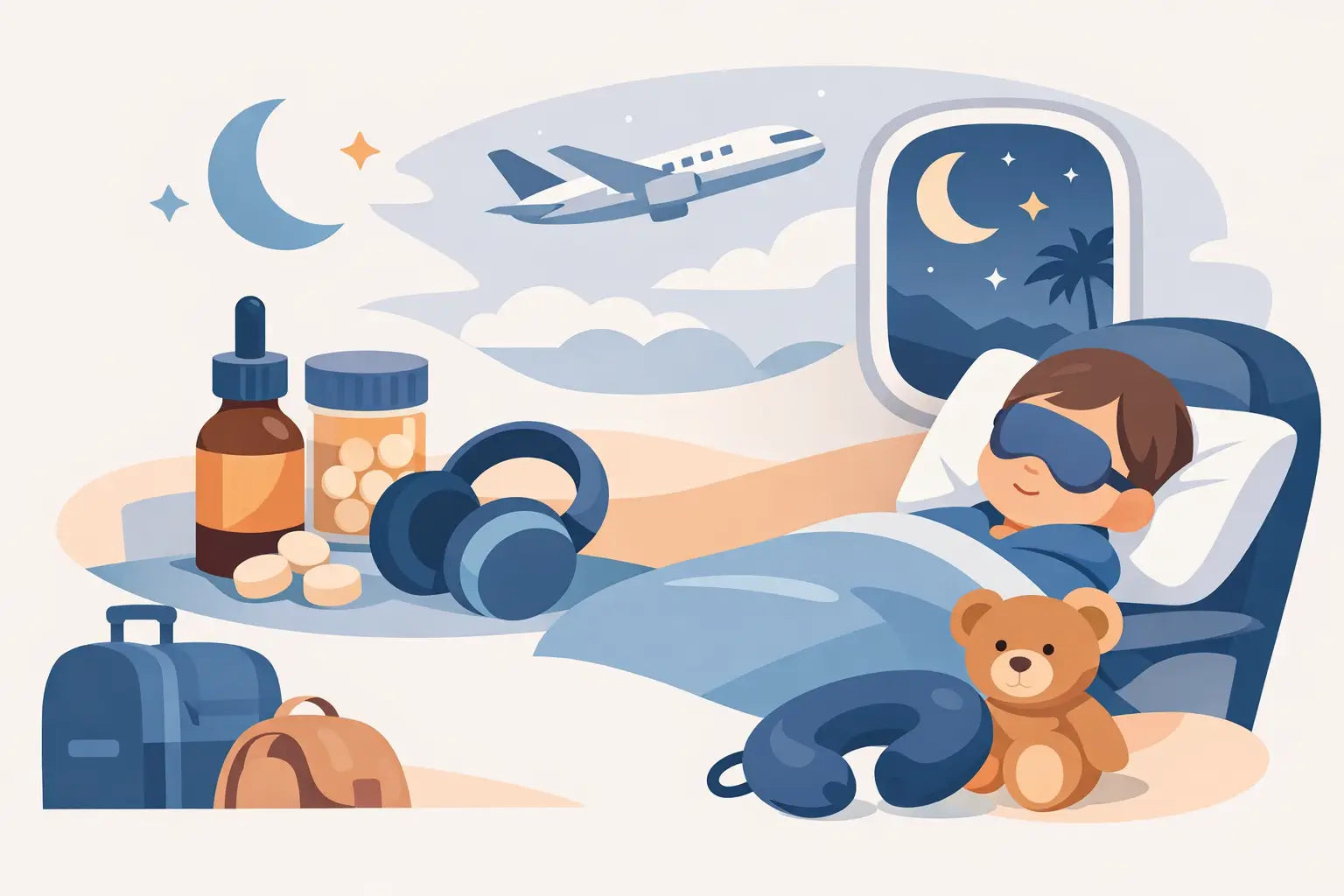
That wired, overtired hotel-room meltdown usually starts long before bedtime. A skipped nap, bright airport lights, unfamiliar sheets, and a later dinner can turn even a solid sleeper into a restless one. The right kids sleep aids for travel will not fix every off-schedule night, but they can make bedtime feel familiar, calmer, and much easier to manage.
Travel sleep is really about reducing change. Kids do better when a new place still feels a little like home, and the best sleep aids help create that bridge. Think less about buying a miracle product and more about building a small, portable sleep setup that works in a hotel, at grandma's house, or on a red-eye flight.
What actually helps kids sleep while traveling
The most effective travel sleep aids usually do one of three jobs. They block stimulation, they recreate familiar cues, or they support comfort. That sounds simple, but it matters because not every sleep struggle needs the same fix.
If your child is bothered by hallway noise, a portable sound machine can make a bigger difference than a new blanket. If they resist bedtime because the room feels strange, a familiar lovey or night light may do more than any gadget. And if they are physically uncomfortable, even the best bedtime routine can fall apart fast.
This is where smart selection matters. No clutter, no compromises. A few well-chosen items outperform a bag full of random sleep products every time.
Best kids sleep aids for travel by type
Portable white noise machines
A compact sound machine is one of the most reliable options for travel. It covers hotel doors closing, elevator traffic, street noise, and the general unfamiliarity of a new sleep environment. For toddlers and younger kids especially, that steady background sound can signal that it is time to wind down.
Look for one that is lightweight, rechargeable, and easy to operate in the dark. Complicated settings are not helpful at 11 p.m. after a delayed flight. Battery life matters too, especially if you are using it overnight in a car, plane, or room with limited outlet access.
The trade-off is that some kids get used to one exact sound and reject others. If your child already sleeps with white noise at home, travel with the same style of sound whenever possible.
Travel blackout solutions
Light is one of the biggest reasons kids struggle to fall asleep in a new place. Hotel curtains often leave gaps, relatives may not have room-darkening shades, and naps become much harder in bright daytime spaces. Portable blackout shades, suction blackout panels, or even a well-designed stroller cover can help create a more sleep-friendly setup.
This category is especially useful for babies and toddlers who are sensitive to light changes. Older kids may care less, but early risers often benefit from a darker room in the morning.
The downside is convenience. Some blackout products pack small and install quickly, while others are awkward or unreliable on different window sizes. If you travel often, choose something designed for repeated use rather than a temporary workaround.
Comfort items that smell and feel familiar
A favorite blanket, soft toy, or toddler pillow can do real work at bedtime. These items are not just cute extras. They bring familiarity into an unfamiliar setting, which lowers resistance and helps kids settle faster.
For younger children, one comfort item is usually enough. Packing too many can create its own bedtime negotiation. For older kids, a familiar sleep mask or a soft travel blanket can add that same sense of routine without feeling babyish.
If your child has a strong attachment item, pack it in your carry-on, not in checked luggage. That is not overthinking it. That is smart travel.
Night lights for unfamiliar rooms
A small night light is helpful when darkness makes a child uneasy or when they wake up confused in a new room. It can also make middle-of-the-night bathroom trips easier for older kids.
The best travel versions are compact, soft-glow, and rechargeable. Avoid lights that are too bright or too blue-toned, since those can work against sleep instead of supporting it. Warm, low light is the goal.
This is one of those products that depends on the child. Some sleep better with complete darkness. Others settle faster when they can orient themselves in the room. If your child already uses a night light at home, bring one. Consistency wins.
Kid-safe sleep headphones or audio comfort
For older kids, calming audio can help them settle in noisy or unfamiliar environments. Think soft bedtime stories, quiet music, or guided relaxation designed for children. This is more niche than white noise, but it can work well for anxious sleepers who have trouble shutting their minds off.
The key here is age and safety. Anything worn while sleeping should be specifically designed for that purpose and fit comfortably. For younger children, external audio is usually the better call.
This option works best as part of an existing routine. Introducing bedtime audio for the first time during a hectic trip is possible, but not ideal.
How to choose kids sleep aids for travel without overpacking
Start with your child's actual sleep issue, not what looks useful online. If bedtime battles happen because the room is bright, prioritize blackout help. If overnight wakeups are triggered by every sound, choose white noise first. If your child mainly struggles with unfamiliar spaces, focus on a comfort item and a repeatable routine.
A good rule is to pack one item for sound, one for light, and one for comfort. That gives you a strong setup without turning your suitcase into a sleep lab.
Size matters too. Travel gear should earn its space. Choose items that are lightweight, rechargeable when possible, and easy to use across different settings. Parents do not need more complexity on the road.
It also helps to test everything at home before the trip. A new sound machine with a harsh loop or a night light that is brighter than expected is better discovered on a Tuesday night than in a hotel after midnight.
Building a simple travel sleep routine
Products help, but routine does a lot of the heavy lifting. Kids are cue-driven, and travel works better when bedtime still follows a familiar sequence. Even if the clock shifts, the pattern should stay recognizable.
Try to keep the same three or four steps you use at home. Maybe that is pajamas, brushing teeth, white noise on, one short story, then lights low. It does not need to be perfect. It needs to feel familiar.
For flights or long car rides, think in phases instead of forcing a full bedtime routine. A comfort item, quiet audio, and a small blanket may be enough to signal rest. In a hotel or vacation rental, you can use the fuller version.
If your child is very schedule-sensitive, start adjusting bedtime gradually a few days before departure, especially across time zones. That small shift can make the first travel night much smoother.
What to skip
Not every product marketed for sleep is worth packing. Strong scents, flashy projector lights, bulky gadgets, and anything with too many buttons often create more stimulation than calm. Simple usually works better.
It is also smart to be cautious with anything your child has never used before, especially if it changes how they normally fall asleep. Travel is already a lot of input. The best sleep aids reduce friction. They should not become another thing to troubleshoot.
And while some parents ask about melatonin or other supplements, that is a conversation for your pediatrician, not a casual add-to-cart decision. What works for one child may not fit another, especially by age and sleep history.
The smartest setup is the one your child will actually use
The best kids sleep aids for travel are not necessarily the most expensive or the most talked about. They are the ones that fit your child's habits, your packing limits, and the reality of your trip. A weekend at a relative's house needs a different setup than an overseas flight or a week of hotel stays.
At Zavira, that is the kind of edit we believe in - practical upgrades that make everyday life run better. Travel with kids does not need more stuff. It needs the right stuff.
A calmer bedtime away from home is rarely about perfection. It is about familiarity, comfort, and fewer obstacles between tired and asleep.
يشارك:
Air Fryer Versus Toaster Oven: What Wins?
Best Home Fragrance for Bedrooms