
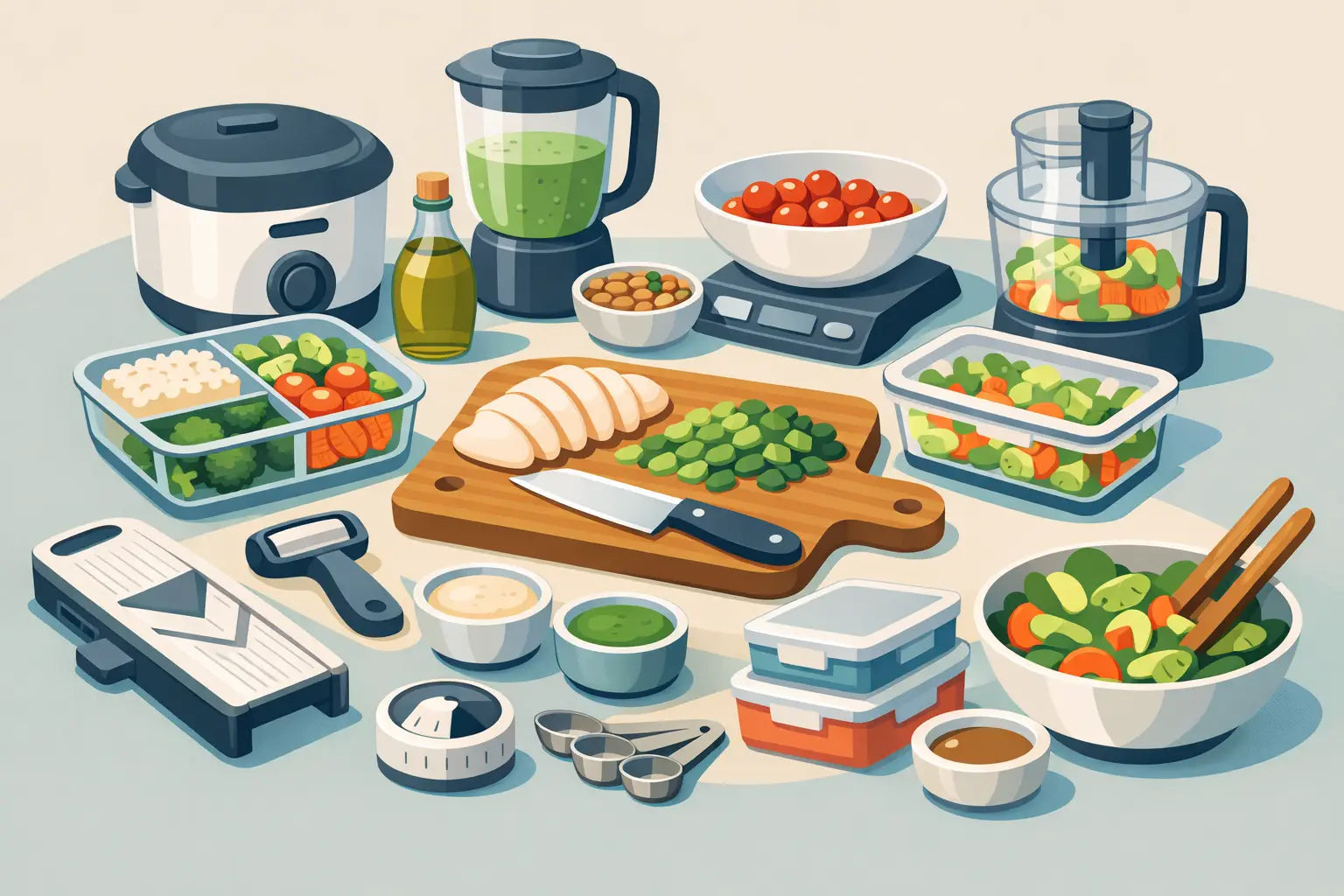
If Sunday night turns your kitchen into a pile of containers, half-cut vegetables, and one dull knife, the fix usually is not more motivation. It is better equipment. The right kitchen tools for meal prep save time, reduce friction, and make the whole routine feel less like a chore and more like a system that works.
That matters because meal prep is rarely about cooking skill alone. It is about speed, consistency, and cleanup. A tool that trims ten minutes off chopping, keeps portions organized, or helps food last longer earns its place fast. A gadget that does one oddly specific thing and then disappears into a drawer does not.
What makes kitchen tools for meal prep worth buying
Good meal prep tools do three things well. They handle repeated use, they simplify a task you actually do every week, and they fit the way you cook. Clean lines, smart function, no clutter. That is the standard.
The trade-off is simple. A fully stocked kitchen can look impressive, but too many tools create drag. You spend more time digging, washing, and storing than actually prepping. The better approach is a compact setup built around a few dependable pieces.
If you prep mostly lunches, your needs are different from someone batch-cooking dinners for a family of four. If your week revolves around chopped produce, grain bowls, or proteins that need portioning, your tool kit should reflect that. Buy for your routine, not for a fantasy version of it.
1. A chef’s knife changes everything
Start here. If your knife is dull, awkward, or too flimsy, every prep session takes longer than it should. A solid chef’s knife handles vegetables, herbs, proteins, and fruit without forcing you to switch tools every few minutes.
This is one of those purchases where quality shows up immediately. Better balance means less hand fatigue. A sharper edge means cleaner cuts and faster work. It also makes prep safer, because you are not fighting the blade.
You do not need a massive knife block. One chef’s knife and a small paring knife cover most weekly prep. Anything beyond that depends on how often you bake, butcher, or work with specialty ingredients.
2. A large cutting board keeps prep moving
Meal prep gets messy when your workspace is too small. A large cutting board gives you room to chop, sort, and transfer ingredients without constantly stopping to clear space.
Wood feels classic and looks great, but it needs more care. High-quality plastic is easier to sanitize and often lighter to handle. If you prep raw proteins and produce in the same session, having two boards is the smart move.
Size matters more than people think. A board that is just slightly too small creates a chain reaction of small annoyances - pieces sliding off the edge, multiple batches of chopping, extra cleanup. Go bigger than you think you need if your counter space allows it.
3. Stackable food storage is the real backbone
The best prep session falls apart fast if your storage situation is chaotic. Mismatched lids, warped containers, and odd sizes turn the fridge into a puzzle. Stackable containers with secure lids keep ingredients visible, portioned, and easy to grab.
Glass feels more elevated and holds up well over time. It is also better for reheating and less likely to absorb odors. Plastic wins on weight and portability, especially if you pack lunches daily. It depends on your priorities.
What matters most is consistency. A set with a few repeat sizes works better than a random collection of containers from takeout and old leftovers. When everything stacks neatly, your fridge works harder for you.
4. Mixing bowls pull double duty
A good set of mixing bowls is not just for baking. During meal prep, bowls act as staging areas for washed produce, marinated proteins, chopped ingredients, or pre-portioned snacks. They keep the process organized before anything goes into the pan or container.
Stainless steel is a strong choice because it is lightweight, durable, and easy to clean. Glass looks polished and lets you see contents easily, but it is heavier. Nested bowls are especially useful if you want function without giving up cabinet space.
This is one of those quiet tools that earns its keep every week. Not flashy. Just useful.
5. Measuring tools help with consistency
If you are tracking portions, trying to repeat recipes, or managing macros, measuring cups and spoons are not optional. Even if you cook by feel, they make sauces, dressings, overnight oats, and batch recipes far more predictable.
Consistency is the value here. When you know what a serving actually looks like, you reduce waste and make meals easier to plan. That is especially helpful when grocery budgets are tight and you want ingredients to stretch across the week.
A kitchen scale is worth adding if precision matters to you. It is especially useful for proteins, grains, and baking, though not everyone needs one. Again, it depends on your style.
6. A sheet pan is one of the smartest tools you can own
Few tools do more with less effort than a sheet pan. You can roast vegetables, cook chicken, bake salmon, or reheat items in batches with minimal cleanup. For meal prep, that kind of flexibility is hard to beat.
Rimmed sheet pans are the practical pick because they contain juices and oils better than flat trays. Pair one with parchment paper or a reusable liner, and cleanup gets even easier.
If your prep routine feels too hands-on, this is often the upgrade that changes it. Load the pan, season well, set a timer, and move on to the next task. Smarter cooking, less babysitting.
7. A reliable blender or food processor saves serious time
This is where meal prep can go from basic to efficient. A blender helps with smoothies, sauces, soups, and dressings. A food processor is better for chopping large amounts of vegetables, making dips, shredding cheese, or mixing doughs.
You do not always need both. If you make smoothies every morning, start with a blender. If you prep slaws, chopped vegetables, and spreads more often, a food processor may be the better fit.
The trade-off is storage and cleanup. These appliances save time on the front end, but only if they are easy enough to pull out and wash without regret. If an appliance feels like too much effort, it will not become part of your routine.
8. A colander and salad spinner are not the same thing
A colander is essential for draining pasta, rinsing beans, and washing produce. A salad spinner goes a step further by actually drying greens, which helps them stay fresh longer and keeps dressings from sliding right off.
If you eat a lot of salads or prep lettuce ahead of time, a spinner is worth it. If not, a sturdy colander may be enough. This is a good example of buying based on habit rather than hype.
Fresh produce lasts longer when it is washed and dried properly. That means less waste, fewer last-minute grocery runs, and a fridge full of ingredients that are actually ready to use.
9. Tongs, peelers, and kitchen shears do more than expected
Some of the best meal prep tools are the least glamorous. Tongs help with turning, tossing, and transferring hot food without making a mess. A sharp peeler speeds through carrots, cucumbers, potatoes, and apples. Kitchen shears are great for trimming herbs, cutting chicken, or opening packaging without hunting for scissors.
These are small upgrades, but they remove friction. And meal prep is often a game of friction. The fewer little annoyances you have, the easier it is to stay consistent.
You do not need premium everything here. You do need tools that feel solid in the hand and survive repeated washing.
10. The best kitchen tools for meal prep also make cleanup easier
One overlooked category is cleanup support. Drying mats, dish racks that actually fit your space, and sink caddies that keep scrubbers organized all matter more than they seem to. If cleanup feels chaotic, prep feels heavier next time.
This is where a well-edited kitchen wins. Every item should either speed up prep, improve storage, or reduce mess. If it does none of those, it is probably taking up space that could be used better.
How to choose without overbuying
The smartest way to shop for kitchen tools for meal prep is to look at your last two weeks, not your goals for next year. What did you cook? What slowed you down? What made cleanup annoying? Those answers point to your next useful purchase.
For some people, the biggest upgrade is a better knife. For others, it is a set of matching containers or a sheet pan that can handle larger batches. A young professional packing weekday lunches may care most about portable storage. A couple setting up a first apartment may want versatile basics that cover a lot without crowding the cabinets.
That is the advantage of buying with intention. Fewer pieces. Better results. Zavira’s approach to home essentials fits that mindset well - practical upgrades, chosen with purpose, built for everyday use.
A kitchen that supports your routine does more than save time. It makes good habits easier to keep. Start with the tools you will reach for every week, and let the rest earn their place.
يشارك:
What Shoes Suit Office Casual Best?
12 Best Perfumes for Gifting