
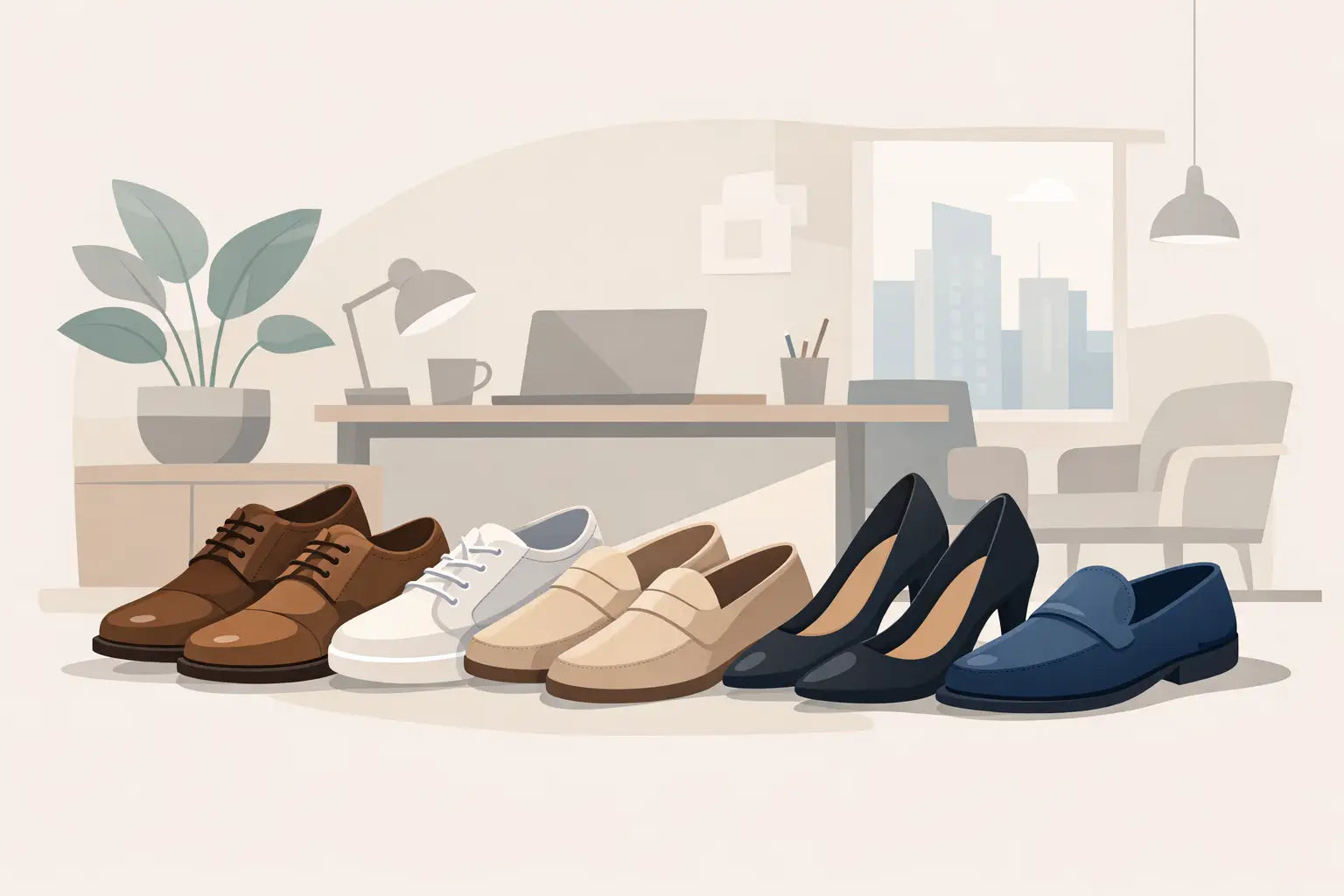
You can tell when a shoe is wrong for the office before anyone says a word. It is the sneaker that feels too off-duty with tailored pants, the heel that looks perfect at dinner but punishing by 10 a.m., or the loafer that almost works but misses the mark because the finish is too casual. If you are asking what shoes suit office casual, the answer is less about one perfect style and more about balance - polished enough for work, easy enough for real life.
Office casual sits in that useful middle ground. It is not formal business wear, but it is not weekend dressing either. The best shoes for it do one job especially well: they make your outfit look intentional without making it look stiff. Smart finds. Better mornings.
What shoes suit office casual today?
The short answer is simple. Office casual shoes should look clean, structured, and versatile. They should also match the level of polish in the rest of your outfit. If your workplace leans more traditional, leather loafers, low heels, and sleek ankle boots usually make sense. If your office is more relaxed, elevated sneakers, refined flats, and minimalist dress shoes can fit just as well.
The easiest filter is this: if the shoe would look out of place in a client meeting, it is probably too casual. If it feels too formal for a team lunch or commute, it may be more shoe than you need. The sweet spot is modern, practical, and pulled together.
The easiest rule: match the shoe to the fabric
A lot of office casual confusion comes from treating shoes as a separate decision. They are not. Your shoes should speak the same language as your clothes.
If you are wearing tailored trousers, knit dresses, midi skirts, or structured blazers, choose shoes with some shape and finish. Leather or faux leather loafers, pointed flats, block heels, and polished boots all work because they echo that cleaner silhouette. If your outfit is softer, like wide-leg pants with a fine knit or a relaxed shirt dress, you can ease into more flexible styles like almond-toe flats or sleek leather sneakers.
Texture matters too. Smooth leather reads sharper than canvas. Suede is softer and slightly more relaxed. Patent finishes look dressier, but they can feel too formal in a low-key office. Matte finishes tend to be the safest all-around choice.
Best office casual shoes for women
For women, the strongest office casual options are usually the ones that bridge comfort and structure. Loafers are a standout because they look smart with trousers, jeans, and skirts without trying too hard. A black, tan, or cream pair covers a lot of ground.
Ballet flats can work too, but not every pair does. The key is choosing a style with enough shape. A pointed or almond toe feels more office-ready than a very round, flimsy flat. Look for pairs that hold their form and have clean detailing rather than oversized bows or overly soft construction.
Low block heels are another reliable choice, especially if your office expects a little more polish. They add height without the strain of a stiletto and pair well with ankle-length trousers, midi dresses, and pencil skirts. If heels are part of your rotation, keep them grounded. Office casual usually favors wearable over dramatic.
Ankle boots are strong in cooler months, particularly sleek styles with a narrow shaft and simple hardware. They work best under straight-leg pants or with dresses that leave enough room for the boot shape to show. Chunky combat styles can be great fashion shoes, but they depend heavily on office culture. In many workplaces, they skew too casual or too edgy.
Minimalist sneakers have earned their place in some office casual wardrobes, but only when they are truly polished. Think clean lines, limited branding, and solid neutral colors. White leather sneakers can work with tailored separates if they are spotless. Mesh running shoes, bright gym sneakers, and bulky soles usually do not make the cut.
Best office casual shoes for men
For men, loafers are one of the easiest answers to what shoes suit office casual. They sit neatly between formal and relaxed, which is exactly where office casual lives. Penny loafers, horsebit loafers, and simple slip-ons in leather or suede all work, depending on how dressed-up your office feels.
Derby shoes are another smart option. They are slightly less formal than Oxfords, which makes them well suited to office casual outfits like chinos, dress pants, and unstructured blazers. If your goal is one pair that handles most weekdays, a dark brown or black Derby is a strong place to start.
Chelsea boots can also fit the brief, especially in fall and winter. They look sharp without feeling corporate and pair easily with slim trousers or dark denim if your office allows it. Just keep the shape streamlined. Heavy lug soles or distressed finishes push the look away from office-ready.
Dress sneakers can work in more relaxed settings, but the same rule applies as with women’s styles: clean, simple, and refined. Leather is better than athletic mesh. Minimal branding is better than bold logos. If the sneaker looks built for the court or the treadmill, leave it for after hours.
Colors that make office casual easier
If you want shoes that work harder, start with neutrals. Black is the cleanest choice for more polished wardrobes and more conservative offices. Brown feels a little warmer and often more versatile for men, especially in medium to dark tones. Tan, taupe, nude, cream, and navy all pull their weight in office casual wardrobes because they pair well without stealing focus.
That does not mean color is off-limits. Deep burgundy, forest green, or muted metallics can still feel sophisticated. The trick is restraint. Office casual style usually rewards colors that look intentional rather than loud.
What to avoid when choosing office casual shoes
The hardest part of office casual is knowing what not to do. Flip-flops, foam slides, overly casual sandals, and worn-out trainers are easy no’s. So are shoes that feel more suited to nightlife than work, like sky-high stilettos, heavily embellished heels, or anything that sacrifices walkability for drama.
There is also a middle category that depends. Mules, platform loafers, fashion clogs, and very chunky sneakers can work in creative offices, but not in every workplace. If your office dress code is vague, it helps to ask one practical question: would this look polished in a meeting with someone senior? If the answer is maybe, choose the more refined option.
Condition matters just as much as style. Even a good office casual shoe stops working if it is scuffed, creased beyond repair, or dirty around the edges. Precision matters. A clean shoe makes the whole outfit look more expensive and more considered.
How comfort changes the right answer
There is no smart style without comfort. If you commute, stand often, or move between meetings all day, the best office casual shoe is the one you can actually wear for hours. That usually means cushioned insoles, stable soles, and materials that soften with wear.
This is where a lot of people overcorrect. They buy the most comfortable shoe possible, then realize it looks too casual for work. Or they buy the sharpest pair, then stop wearing it after a week. The better move is to prioritize comfort inside a polished silhouette. Low block heels instead of high pumps. Leather sneakers instead of running shoes. Loafers with support instead of paper-thin flats.
If your office has a true business-casual lean, keep a dressier pair at your desk and commute in something more practical. That is not cheating. It is efficient.
What shoes suit office casual in different office cultures?
Not every office means the same thing by casual. In finance, law, or client-facing corporate roles, office casual usually still calls for structured loafers, low heels, polished boots, and classic dress shoes. In tech, design, or startup settings, the range is wider, and elevated sneakers may be completely normal.
This is why context beats trend reports. The best office casual shoe is the one that fits your workplace, your wardrobe, and your day. Style should make decisions easier, not harder. Brands like Zavira build around that idea - fewer random picks, more pieces that earn their place.
A good test is to look at your three most-worn work outfits. If a shoe works with all three, it is probably a smart buy. If it only works with one very specific look, it may not be the office casual staple you hoped for.
Build a small rotation, not a crowded rack
Most people do not need ten pairs of office shoes. They need three or four that cover real life. For women, that might mean loafers, refined flats, ankle boots, and one low heel. For men, it could be loafers, Derby shoes, Chelsea boots, and a clean dress sneaker for casual days.
That kind of rotation keeps mornings simple. No clutter, no compromises. You get enough variety to match the season and your schedule, without wasting money on pairs that barely leave the closet.
When you are deciding what shoes suit office casual, aim for styles that look sharp on day one and still make sense a year from now. The best pair is not the loudest or the trendiest. It is the one that quietly upgrades everything you wear and makes getting dressed feel easy.
يشارك:
Women Flat Sandals Review: What to Buy
10 Kitchen Tools for Meal Prep That Work