
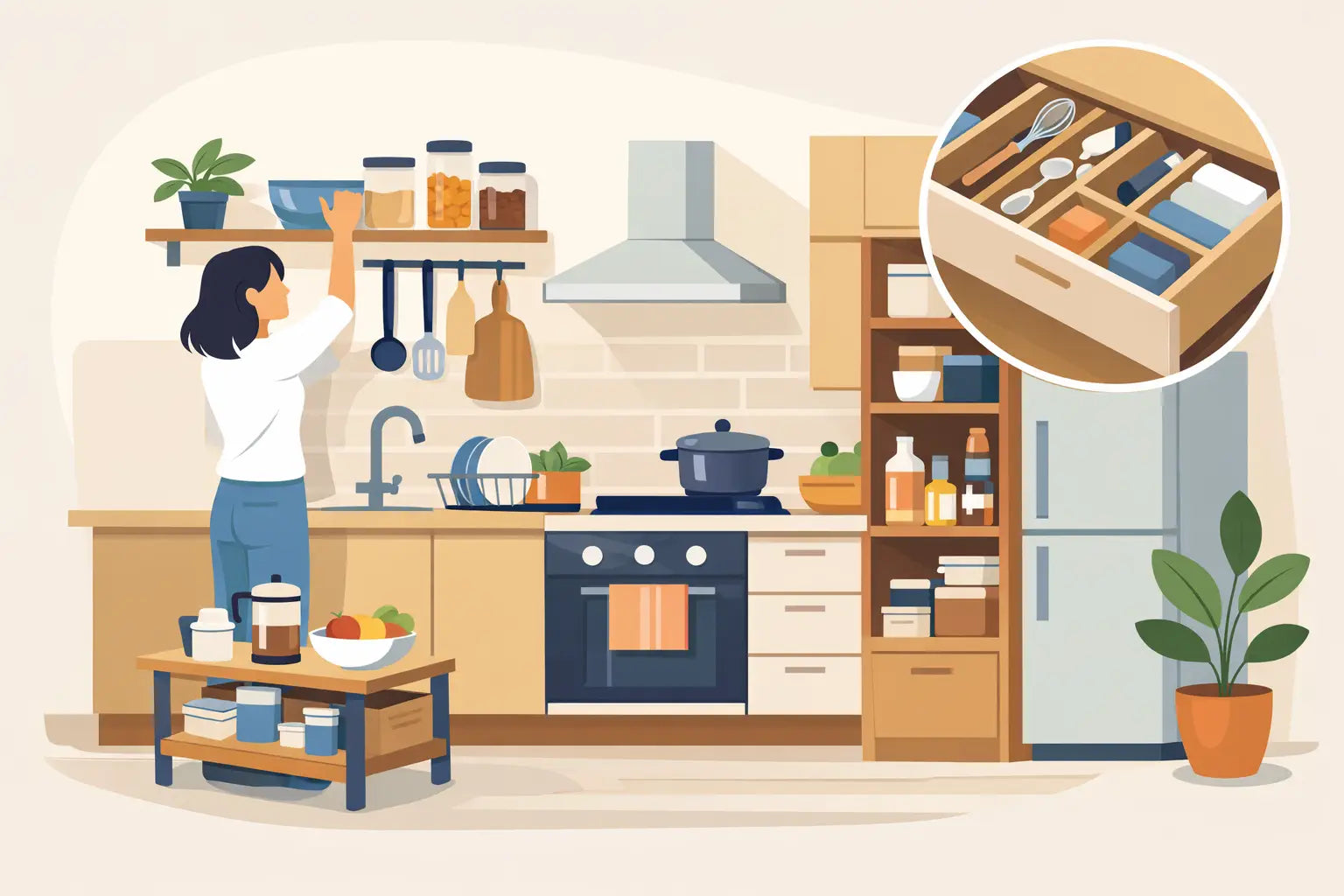
A small kitchen usually doesn’t fail because it lacks space. It fails because every inch is trying to do too much. One drawer holds utensils, batteries, takeout menus, and a lone birthday candle. The counter becomes a mail drop. The cabinet above the stove turns into a graveyard for mismatched lids. If you’re figuring out how to organize a small kitchen, the goal is simple: less friction, more function.
That means organizing for the way you actually live. Not for a showroom. Not for a color-coded fantasy. Just a kitchen that feels easier the second you walk into it.
How to organize a small kitchen without wasting space
The fastest way to make a tiny kitchen feel bigger is not buying more containers. It’s editing first. Small kitchens punish overbuying and reward clarity.
Start with the hard truth: if you only use one stockpot twice a year, it should not live in your most accessible cabinet. If you have three water bottles with missing lids, they are not inventory. They are clutter. In a small kitchen, every item needs a reason to stay.
Pull everything out by category - dishes, cookware, food storage, pantry items, cleaning supplies, small appliances, mugs, tools. This matters because clutter hides in mixed spaces. A junk drawer looks manageable until you realize half of it belongs somewhere else or nowhere at all.
As you sort, use a simple filter: daily, weekly, rarely, never. Daily items earn prime placement. Weekly items can go a little higher or deeper. Rarely used pieces can live on the top shelf or outside the kitchen entirely. Never used is your easiest decision of the day.
Build your kitchen around zones
Smart kitchens are organized by task, not by product type alone. This is where many small spaces go wrong. People store all utensils together, all pantry goods together, and all appliances together, even when that creates extra steps every time they cook.
Instead, create zones that match your routine. Keep prep tools near the cutting area. Store oils, salt, and your most-used pan near the stove. Put plates, bowls, and glasses near the dishwasher or drying rack if possible. Keep coffee supplies together instead of splitting mugs in one cabinet and filters in another.
A small kitchen works best when it behaves like a compact system. Fewer steps. Fewer decisions. Better flow.
The five zones that usually matter most
Most households do well with five practical zones: prep, cook, serve, store, and clean. Your prep zone needs knives, cutting boards, mixing bowls, and measuring tools. Your cook zone needs pans, spatulas, spices, and oils. Your serve zone holds dishes, cups, and everyday flatware. Your store zone covers pantry goods and food containers. Your clean zone includes dishwasher pods, sponges, trash bags, and towels.
The exact layout depends on your kitchen. If you have one run of cabinets, zones may overlap. That’s fine. The point is to stop making your morning coffee require movement across the entire room.
Use vertical space like it counts
In a small kitchen, horizontal space disappears first. Vertical space is where you get your breathing room back.
Cabinets often waste height. A shelf that holds mugs may still leave six inches of unused air above them. That’s where shelf risers, under-shelf baskets, and stackable bins earn their keep. They don’t create more square footage, but they do create usable layers.
Inside lower cabinets, add pull-out bins or simple baskets so items in the back don’t become forgotten inventory. Under the sink, use narrow organizers that work around plumbing instead of fighting it. On walls, a rail or hook system can hold cooking tools, towels, or even a few frequently used pans if you like the look.
This is also where restraint matters. Open storage can look sharp, but only if what’s visible is edited. Too many hanging tools or exposed shelves can make a small kitchen feel busier, not better. Clean lines win.
Fix the cabinet problems that waste the most room
Most small kitchens have the same pressure points. Corner cabinets eat cookware. Lid storage gets chaotic. Food containers multiply with zero discipline.
Pots and pans are easier to manage when lids are stored upright, not stacked on top. File organizers or lid racks help, but even a simple divided bin can work. Nest cookware when possible, and keep your go-to pieces closest to the front.
Food storage deserves stricter rules than people usually give it. If containers don’t stack, if they’re stained beyond saving, or if the lids don’t match, let them go. Keeping a tight set of uniform containers saves more room than almost any other reset.
For pantry cabinets, avoid deep stacking unless you can still see what’s behind the first row. Lost food becomes wasted money. Use turntables for oils and sauces, bins for snacks, and clear containers only where they genuinely help. Decanting everything into matching jars looks polished, but it takes time and doesn’t suit every household. Sometimes the smarter move is just grouping similar items together and labeling the basket.
Get your counters back
Nothing makes a small kitchen feel smaller than crowded counters. The fix is not emptying them completely. It’s being selective.
Keep only what you use constantly and what earns the visual space. Maybe that’s a coffee maker, a utensil crock, and a fruit bowl. Maybe it’s a toaster and a soap dispenser. That’s enough for many kitchens.
Everything else should face a simple test: do you use it at least several times a week, and does putting it away make your life noticeably worse? If not, store it. Stand mixers, air fryers, and blenders are useful, but not always counter-worthy. It depends on your habits.
Visual calm matters here. A small kitchen can feel more expensive, more functional, and easier to clean when the counter isn’t fighting for attention. Better function. Better mood.
Create order in drawers
Drawers can carry more than most people realize, but only if they’re divided well. Without structure, they become fast-moving clutter zones.
Use simple inserts for flatware, cooking utensils, and odds and ends. Keep your most-used tools in the top drawer closest to the prep or cook zone. Less-used gadgets can go in a secondary drawer or a bin on a shelf.
Be honest about novelty tools. Egg slicers, avocado gadgets, strawberry hullers - they all ask for drawer space. Some are worth it. Most are not. In a small kitchen, single-use items should justify themselves quickly.
One shallow drawer for kitchen linens, wraps, and bags can also help, especially if those items are currently scattered across multiple cabinets. Tight categories make a kitchen feel controlled.
Make the pantry work harder
If your kitchen includes even one narrow pantry cabinet, that space should be doing real work. Organize it by frequency and type. Breakfast items together. Pasta and grains together. Cans together. Snacks corralled in bins so they don’t travel.
Put everyday items between waist and eye level. Reserve high shelves for backstock or occasional baking supplies. Lower shelves can hold heavier items like bottled drinks or bulk goods.
If you don’t have a pantry, create one. A dedicated cabinet, a rolling cart, or a few uniform bins can function like a pantry if you’re consistent. The trick is not the setup itself. The trick is keeping categories intact after the first grocery run.
Small habits keep it organized
The real answer to how to organize a small kitchen is not one perfect setup. It’s a setup you can maintain with minimal effort.
That means resetting the kitchen in five minutes most nights. Put items back in their zones. Empty the drying rack. Clear the counter. Toss expired food once a week. Do a quick check before grocery shopping so duplicates don’t pile up.
Small kitchens don’t have much room for delayed decisions. A bag of snacks without a home turns into three bags. Two extra mugs become a crowded shelf. One unopened package of paper towels takes over valuable space under the sink. The smaller the room, the faster little things compound.
If you’re refreshing your space and want pieces that feel useful instead of random, a curated approach helps. That’s part of the appeal behind shopping edited home essentials from a retailer like Zavira at https://zaviraksa.com/ - fewer guesswork purchases, more everyday upgrades that actually fit your life.
When organization needs a different answer
Sometimes the issue isn’t organization. It’s volume. If you cook often, entertain regularly, buy in bulk, or share the kitchen with multiple people, your small kitchen may simply be overcapacity.
That doesn’t mean you’ve failed. It means you may need off-site storage for rarely used serving pieces, seasonal items, or overflow pantry stock. A nearby closet, dining room cabinet, or entryway shelf can support the kitchen without making it less functional.
The best small kitchens are not trying to hold everything. They’re edited, intentional, and easy to use. That’s the standard worth aiming for.
A well-organized kitchen changes ordinary moments more than people expect. Mornings run smoother. Cooking feels less cramped. Cleanup becomes faster. And the space starts giving something back instead of asking for constant attention.
Share:
Eau de Parfum vs Eau de Toilette
Capsule Wardrobe Example for Workweek