
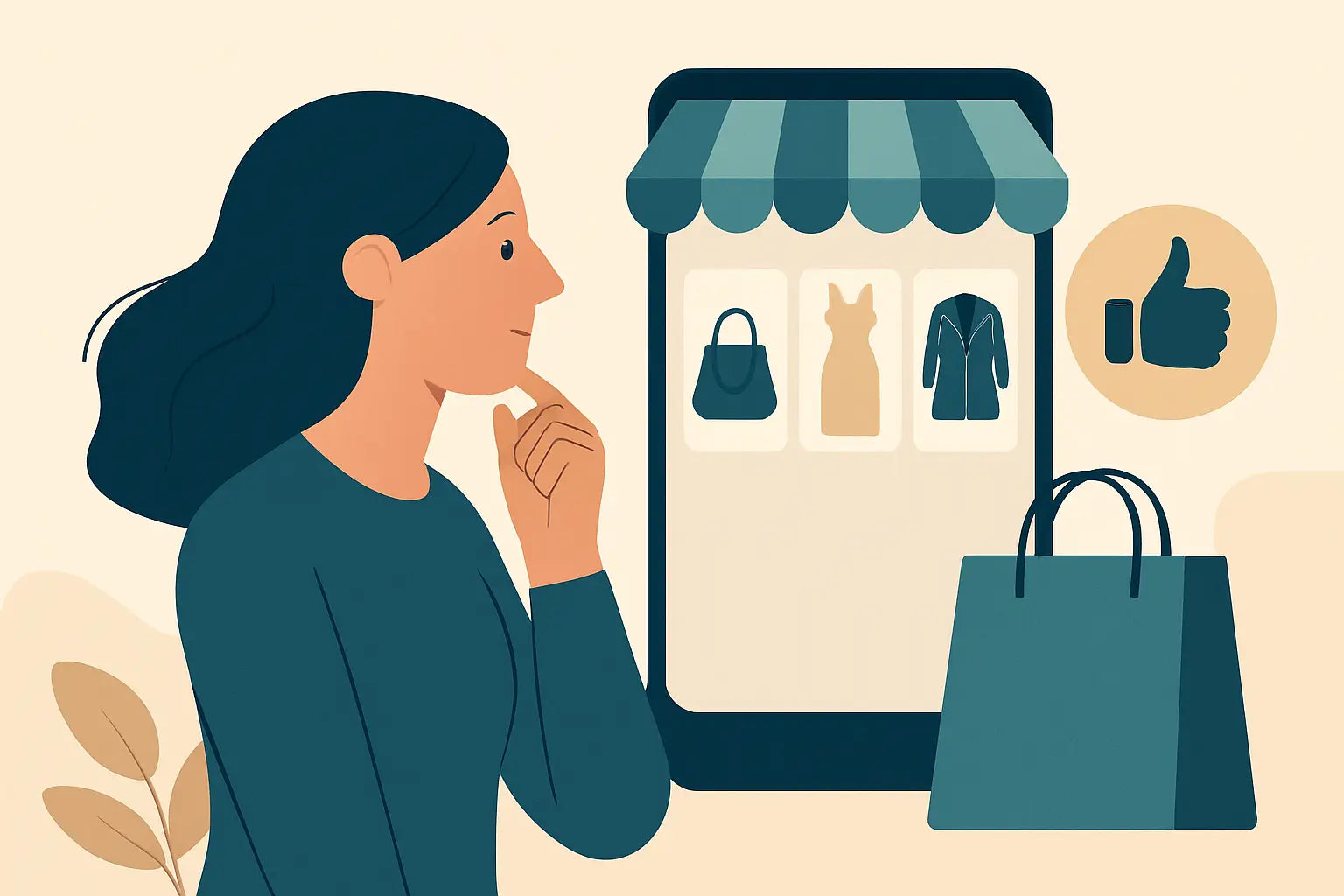
You do not need more options. You need fewer, better ones.
That is the real promise behind curated collections. When a store edits for you, shopping stops being a scavenger hunt and starts feeling like a shortcut to a cleaner closet, a calmer bathroom counter, or a home that looks pulled together without trying too hard.
But curation is not magic. It is a filter. If you know how to use that filter, curated shopping saves time and money. If you do not, it can still turn into impulse buying - just with better lighting.
What “curated” actually means (and what it does not)
A curated collection is an intentional edit: a retailer decides what makes the cut, groups it into clear pathways, and removes the clutter that usually forces you to compare 27 similar items. Done well, the assortment feels cohesive. It is easier to match pieces, easier to trust basics, and faster to check out.
What it does not mean is “perfect for everyone.” A curated store is making taste decisions for you. That is the trade-off. You gain speed and simplicity, but you might see fewer niche styles, fewer colors, or fewer extreme price points.
The goal is not to find the “best” item in the entire internet. The goal is to find the right upgrade for your life - quickly - and feel good about it after it arrives.
How to shop curated collections without overbuying
Curated shopping works best when you show up with a mission, not a mood. The store is already doing the editing. Your job is to be specific about the outcome.
Start with one sentence: “I’m upgrading X because Y is annoying.” A backpack that hurts your shoulders. A fragrance that fades in an hour. Kitchen tools that make weeknights harder than they should be. When you name the friction, you stop buying for a fantasy version of your life.
Then set a boundary before you browse. Pick a budget range and a time limit. Curated collections reduce noise, but you can still scroll yourself into indecision if you treat it like entertainment.
Choose the pathway first, not the product
Most curated retailers organize their catalog into life lanes - For Him, For Her, For Kids, For Home - for a reason. It keeps you from bouncing between categories and buying random one-offs.
If your goal is “weekday outfits,” stay in fashion, shoes, and accessories until the look is complete. If your goal is “calmer mornings,” stay in beauty, fragrance, and health until the routine makes sense. If your goal is “a home that feels finished,” stay in decor, kitchen, and home fragrance until the space has a consistent tone.
Shopping by pathway is how you get the real benefit of curation: fewer decisions, better cohesion.
The 3-question filter that prevents regret
Before you add anything to cart, ask three questions. They are simple, but they cut returns and second-guessing.
First: Will I use this weekly? “Weekly” is the line between a real upgrade and a someday purchase. Watches, bags, skincare staples, reliable shoes, a kettle you use daily - these earn their place.
Second: Does it match the life I actually live? If you commute, carry a laptop, chase a toddler, cook most nights, or travel often, your purchases should reflect that reality. Curated collections are strongest when you buy for function first, then style.
Third: What am I replacing? If the answer is “nothing,” pause. Sometimes a new item is fine, but replacements keep your space and spending under control. One in, one out is a clean rule that fits a minimalist, curated mindset.
If an item clears all three, you are not impulse buying. You are editing your life.
Read the collection like a stylist, not a shopper
Curated collections are designed to be read as a system. That is where most people miss the advantage.
Look for repeated materials, shapes, and tones across categories. If you see the same clean neutrals in apparel, the same streamlined silhouettes in bags, and the same modern vibe in home decor, the retailer is telling you, “These items live well together.”
That matters because the cheapest way to look more put-together is not chasing trends. It is building consistency.
If you already know your aesthetic, use curation to reinforce it. If you do not, use the collection’s visual language as a ready-made template. Either way, you are borrowing taste instead of spending hours trying to develop it on a product-by-product basis.
When to buy a bundle (and when not to)
“Better Together” deals are tempting because they feel efficient - and often they are. Bundling is smart when items are naturally paired and you will use both.
Bundles are especially practical for everyday categories: fragrance plus body care, a bag plus wallet, a kitchen tool plus an appliance accessory, or matching home fragrance pieces. The win is not just price. It is reduced decision load. You stop hunting for the “right match” because the match is already chosen.
The trade-off is commitment. Bundles narrow flexibility. If you are still figuring out your style, or if you are experimenting with scents or skincare, bundling can lock you into more product than you need.
A clean rule: bundle when the second item solves a real problem (organization, convenience, replacement), not when it simply makes the cart feel more exciting.
Use incentives like a strategist
First-order discounts and free shipping are great - if they do not push you into buying extra stuff you did not intend to buy.
If you are close to a free shipping threshold, do not fill the gap with random items. Fill it with a “boring essential” you will absolutely use: socks, a basic tee, a simple home staple, or a replacement you have been putting off. Curated stores shine at these practical upgrades because the basics are selected with taste, not treated as an afterthought.
If you have a 15% off code, apply it to the item with the highest regret risk. That is usually the item you care most about getting right: shoes, a watch, a bag, a signature fragrance, or anything you will wear or use constantly. Discounting the anchor piece is a smarter use of the incentive than discounting the small add-ons.
Category-by-category: how to shop the edit
Curated does not mean identical rules across categories. A fragrance purchase is not the same as a kitchen appliance. Here is how to think about the core lifestyle lanes.
Fashion, shoes, and accessories: buy the “frame” first
Start with pieces that shape your daily look: shoes, a bag, and one or two layers that work across outfits. These are your anchors. Once anchors are set, clothing becomes easier because the collection is already edited to coordinate.
Fit is the main risk here. If you are between sizes, prioritize retailers with stress-free returns and clear sizing guidance. Curated collections reduce choice, but they cannot eliminate fit variability.
Watches and glasses: prioritize versatility over flash
Curated accessories are most valuable when they are wearable across contexts. If you want a daily watch, choose a design that works with casual and work looks. For eyewear, think about your real schedule: screen time, commuting, weekends outside. The best choice is the one that fits your routine, not the one that looks coolest on a product page.
Beauty, health, and fragrance: pick one goal, not ten
Curated beauty can still overwhelm if you shop like you are building a whole new identity. Choose one goal per order: clearer skin, a simpler routine, a scent upgrade, or a restock. You will get better results and you will actually finish what you buy.
With fragrance, do not over-index on trend notes. Think about when you will wear it and how strong you want it to be. Daily scents should feel easy. Occasion scents can be bolder.
Kids: shop for the next 8-12 weeks
Kids outgrow, spill, and change preferences fast. Curated collections help by keeping options practical, but your best move is to buy for the near future. Think season, size, and your household routine. If mornings are chaos, prioritize easy-on pieces and grab-and-go accessories.
Home, kitchen, and decor: choose one room to improve
Home shopping gets expensive when you spread purchases across every room. Pick one space that will change your day-to-day most: the bedroom for better sleep, the kitchen for easier weeknights, the living room for a calmer vibe.
Then buy in a small set: one functional upgrade, one visual upgrade, and one comfort upgrade. For example, a kitchen tool that saves time, a decor piece that adds structure, and a home fragrance that makes the space feel finished. When you shop like this, curation does what it is supposed to do: create a coherent result, not a pile of stuff.
Trust builders matter more with curated shopping
When a store asks you to trust its taste, the policies and proof points become part of the product.
Stress-free returns reduce the biggest downside of curated edits: you cannot always compare dozens of alternatives. Reviews and customer photos help you calibrate expectations. And clear shipping information keeps the experience clean, especially if you are buying multi-category items that need to arrive on a specific timeline.
If you want a curated, multi-category experience built around everyday upgrades and “no clutter, no compromises,” Zavira is designed for exactly that kind of shopping.
A smarter way to build your cart
Try building your cart in two passes.
Pass one is purely functional: the item that solves the problem you started with. Pass two is cohesion: one add-on that makes the main item work harder, like the wallet that fits the bag, the fragrance that matches your vibe, or the home piece that ties the room together.
Stop there if you can. The point of curated shopping is not a bigger cart. It is a better one.
The best feeling is not clicking “Place Order.” It is using what you bought a week later and realizing your day runs smoother because you chose upgrades, not distractions.
Share:
What Is a Curated Online Store, Really?
Smart Home Upgrades That Cost Less