
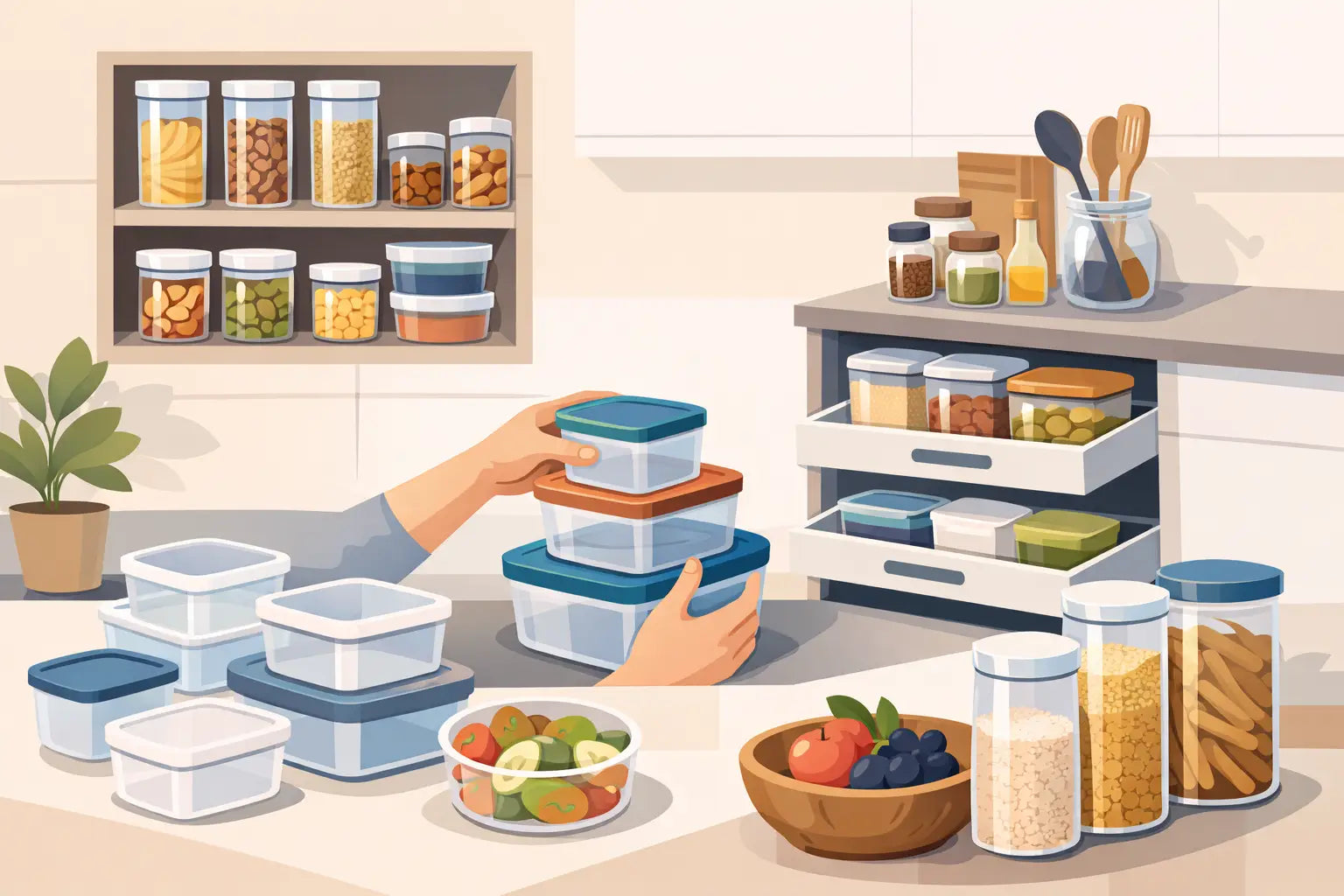
A cabinet full of mismatched lids can turn a clean kitchen into a daily annoyance fast. If you're figuring out how to organize kitchen containers, the goal is simple - less digging, less wasted space, and a setup that works on busy weekdays, not just right after a deep clean.
The best container systems are not the biggest or the most expensive. They are the easiest to maintain. That means keeping what you use, editing out what you do not, and giving every container and lid a clear home. Smart kitchen organization is not about perfection. It is about making everyday routines feel lighter.
How to organize kitchen containers without overcomplicating it
Start by taking out every container and every lid. Yes, all of them. It is the fastest way to see the real problem. Most people do not have a storage issue as much as they have a duplicate issue. Too many shapes, too many sizes, too many pieces with no match.
Set everything on the counter or table and sort it into three groups: keep, donate, and toss. Any container without a matching lid should go. Any lid that fits nothing should go too. Stained, cracked, warped, or heavily scratched pieces are usually not worth the space they take up.
This first edit matters more than any organizer you can buy. No clutter, no compromises. If your collection is tight and functional, almost any cabinet can work better.
Choose one system, not five
The easiest kitchens to keep organized usually have some consistency. That does not mean every container has to be identical, but they should follow a clear logic. If you mix round glass bowls, tall plastic tubs, disposable takeout containers, and specialty pieces with no pattern, storing them becomes harder than it needs to be.
A simple approach is to keep a small range of sizes in one or two materials. For example, many households do well with small containers for sauces and snacks, medium ones for leftovers and lunch prep, and larger ones for batch cooking. If they stack neatly and the lids fit across multiple sizes, even better.
Glass looks polished, resists stains, and often lasts longer. Plastic is lighter, usually cheaper, and easier for kids' lunches or packed meals. It depends on how you cook and who uses the kitchen. A young professional meal-prepping for the week may prefer a uniform glass set. A family with younger kids may need lighter, more portable options. The right choice is the one you will actually use every day.
Store containers and lids separately
This is where most setups fail. Nesting containers together saves space, but stacking lids on top of them usually creates a slide-and-fall mess. Containers and lids work better when they are stored in separate zones.
Nest the containers by size, keeping stacks short enough that you can grab one without unbuilding the whole pile. Three or four high is usually manageable. If the stack is taller than that, it is probably a sign you have too many.
Lids should stand vertically whenever possible. A simple lid organizer, a narrow bin, or even a divided drawer can keep them upright and visible. When lids are filed instead of piled, you can spot the right one in seconds. That one change can save more frustration than any aesthetic storage upgrade.
Use the cabinet you have more strategically
You do not need a huge pantry to make this work. You need better zones. Kitchen containers should live close to where you unload the dishwasher, pack lunches, or store leftovers. Convenience wins. If the ideal spot is too far from your actual routine, the system will slowly break.
Lower cabinets are often better for heavier glass sets. Upper shelves can work for lighter plastic containers, but only if stacks stay stable and reachable. Deep drawers are excellent for container storage because they let you see everything from above, which reduces the need to shuffle pieces around.
If your shelf height leaves awkward empty space above shorter stacks, add a shelf riser or under-shelf basket. Vertical space is often wasted in kitchen cabinets. A small upgrade can make the area feel custom instead of cramped.
Group by real-life use
One of the smartest answers to how to organize kitchen containers is to stop thinking only by size and start thinking by purpose. If you use certain containers every day, they should be the easiest to reach.
Keep your go-to lunch containers front and center. Store larger leftover containers nearby, but not necessarily in the prime spot. Seasonal or occasional pieces, like oversized containers for holiday baking or party platters, can go higher up or farther back.
This matters even more in shared kitchens. If multiple people are grabbing containers for work lunches, school snacks, or post-dinner leftovers, an intuitive setup prevents constant reshuffling. Everyone should be able to find what they need without asking where the matching lid is.
Make drawer organization work harder
If you have a spare deep drawer, use it. Drawers often outperform cabinets for container storage because they create visibility. You pull out the drawer, see the full selection, and grab what you need. No crouching, no blind stacking, no surprise avalanche.
Use drawer dividers or bins to create clean sections for small containers, larger containers, and lids. Keep the most-used sizes closest to the front. If your collection is streamlined, the drawer will stay neat with very little effort.
The trade-off is capacity. Drawers can fill up quickly, especially with bulky glass containers. If space is limited, use the drawer for lids and everyday pieces, then keep overflow items in a nearby cabinet.
Do not let extras quietly take over
Promotional containers, takeout tubs, and random freebies are where clutter sneaks back in. They seem useful, so they stay. Then they multiply. Before long, your organized cabinet is packed with pieces you never choose first.
Set a limit. Maybe you keep three takeout containers for sending leftovers home with guests or storing messy ingredients. Maybe you keep one small bin of backup pieces and nothing beyond it. The exact number is up to you. The point is to decide on purpose instead of letting extras decide for you.
A curated kitchen feels better because it removes friction. That same idea applies here. Precision selection beats volume every time.
Labeling can help, but only in the right kitchen
Labels are useful when your household relies on consistency or when containers live in bins that hide what is inside. They can also help if you store different categories together, like lunch prep containers in one section and baking storage in another.
But labels are not mandatory. In a small kitchen with a simple setup, they can be unnecessary visual noise. If your containers are uniform and your zones are obvious, skip them. Clean and clear usually wins.
If you do label, keep it minimal. Label the section, not every single piece. That keeps the system flexible when your needs shift.
Maintain the system in under five minutes
A good organization system should not require a monthly reset. It should recover quickly from real use. The easiest way to maintain container storage is with a short weekly check while unloading the dishwasher or putting away groceries.
Restack any loose pieces. Match lids that got separated. Remove any damaged containers before they slip back into circulation. If a certain size never seems to be available when you need it, that tells you something. You may need more of that size and fewer of another.
This is where style meets function. The best kitchen tools earn their space. If a container is awkward to stack, hard to clean, or constantly missing its lid, it is not helping your routine. Upgrade where it counts. Shopping, but smarter.
When to replace instead of reorganize
Sometimes the problem is not your system. It is the containers themselves. If your collection is made up of random shapes that do not stack, cracked plastic with cloudy lids, or bulky pieces that waste cabinet depth, no amount of rearranging will fully solve it.
Replacing an inconsistent mix with a tighter, better-designed set can actually save money over time because it reduces breakage, waste, and duplicate buying. Look for stackable shapes, easy-grip lids, and sizes that fit the way you actually cook. Better together applies here too - pieces that work as a system are easier to store and easier to live with.
A kitchen does not need more stuff. It needs better choices. Get your containers down to the ones you trust, store them where they make sense, and let the rest go. When your cabinets open cleanly and your leftovers have a place to land, everyday cooking feels a little more elevated.
Share:
Humidifier vs Diffuser Bedroom Guide
Review of Insulated Water Bottles That Last