
You know the feeling: you search for a “simple” upgrade - a better everyday watch, a cleaner-looking throw blanket, a kids’ item that actually holds up - and somehow you’re 47 tabs deep, comparing lookalikes with wildly different reviews.
A curated online store is built to stop that spiral. It’s shopping, edited.
What is a curated online store?
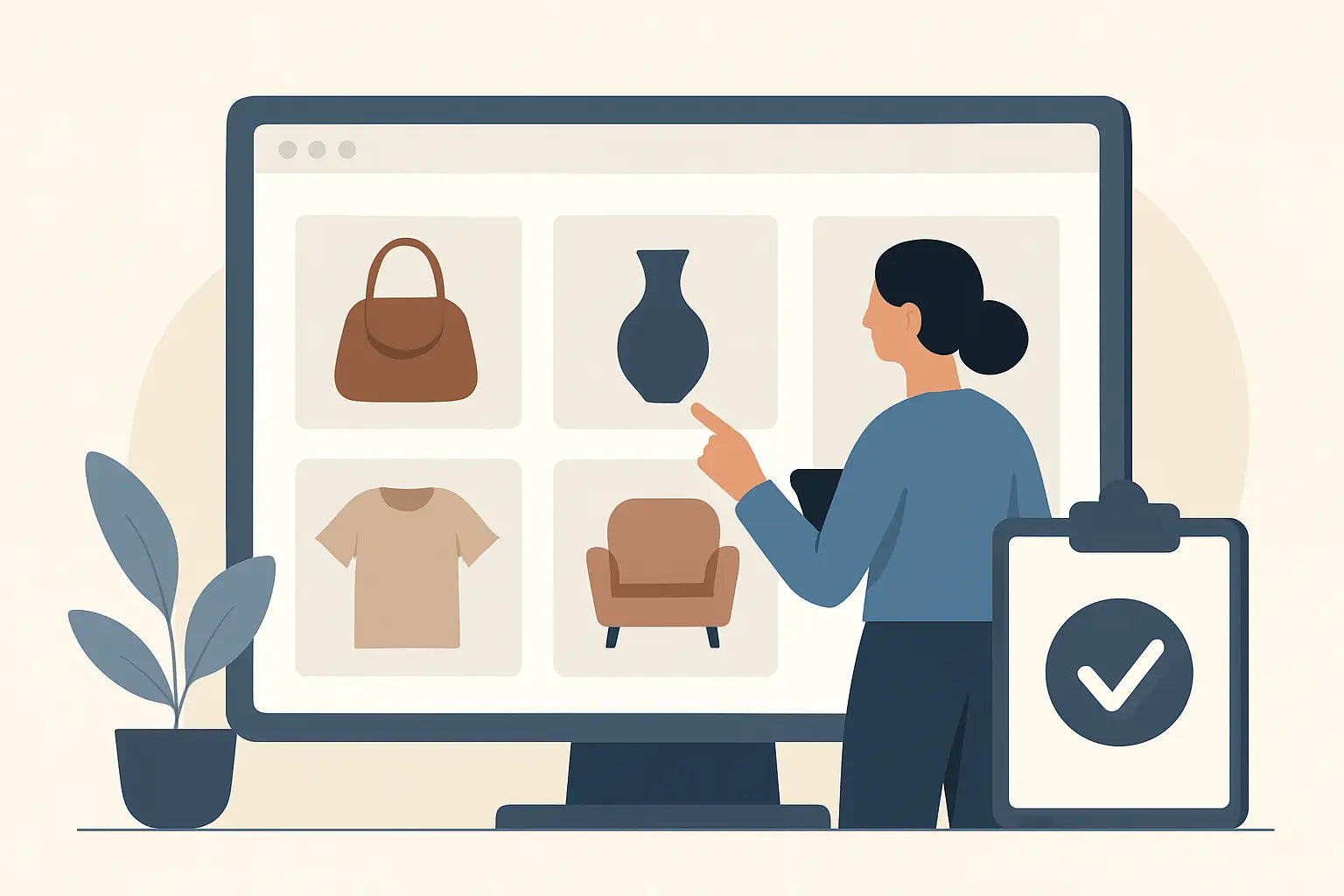
A curated online store is an ecommerce shop that intentionally selects a tighter assortment of products based on a clear point of view - style, function, quality, price-value, or a specific lifestyle - instead of listing everything it can source.
Think of it as the difference between walking into a well-designed boutique versus wandering a warehouse. Both might have what you need. One is designed to help you choose quickly and feel good about it.
Curated doesn’t mean “expensive,” “exclusive,” or “trend-only.” It means the store acts like a filter. The brand takes responsibility for reducing clutter, organizing the experience, and guiding you toward options that make sense for real life.
The real problem curated stores solve: shopping fatigue
Most online shopping isn’t hard because there are no options. It’s hard because there are too many.
When every search returns hundreds of near-identical products, the burden shifts to you: research, compare, guess which photos are accurate, and hope the reviews aren’t inflated. That’s time. That’s mental energy. And it often leads to one of two outcomes: you buy the cheapest and regret it, or you buy nothing and stay stuck.
Curated stores are designed for the person who wants a better answer faster.
They reduce “decision tax” in a few practical ways. First, by narrowing the assortment so you’re comparing a handful of smart picks instead of endless duplicates. Second, by presenting products in shopping pathways that match how people actually buy - for a person, for a room, for a moment, for a need.
If you’ve ever thought, “I just want something that looks right, works well, and doesn’t waste my time,” you’re already the target customer for curation.
How a curated online store works (behind the scenes)
Curation is a system, not a vibe. The best curated stores operate with consistent selection rules.
1) A point of view, not a pile of inventory
A curated store starts with a clear standard. That standard might be modern basics, everyday upgrades, minimal design, family-friendly function, or value without the cheap feel.
Without that point of view, “curated” becomes a marketing word slapped onto a random catalog. Real curation shows up in what’s missing. If a store is willing to say no to clutter, it’s more likely to say yes only when a product fits.
2) Editing for usefulness, not novelty
The internet loves new. But most shoppers love dependable.
Curated assortments prioritize items that earn their place - things you’ll use repeatedly, wear often, or rely on daily. That’s why you’ll see fewer gimmicks and more products that fit into routines: a fragrance you actually finish, home pieces that don’t look dated in six months, accessories that elevate an outfit without screaming for attention.
3) Structure that matches how you shop
Curated stores usually organize by lifestyle and intent. For example, instead of forcing you into deep subcategories, they might start with “For Him,” “For Her,” “For Kids,” and “For Home,” then guide you into the right zone: apparel, shoes, watches and glasses, bags and wallets, perfumes, beauty and health, kitchen goods, furniture and decor, home fragrance.
That structure matters. It keeps you moving. It turns browsing into choosing.
4) Trust builders that reduce risk
Curation alone doesn’t solve the fear of “What if it shows up and it’s not it?” That’s why curated stores often lean into practical confidence: clear shipping policies, simple returns, and real customer feedback.
Good curation is only as strong as the buying experience behind it. If the store can’t deliver reliably, the edit doesn’t matter.
Curated vs. marketplace: what’s the difference?
Marketplaces are built for scale. Curated stores are built for clarity.
A marketplace typically lists products from countless sellers, often with overlapping items, inconsistent quality control, and mixed fulfillment standards. You might find a great deal. You might also spend an hour verifying whether the photos match the product, whether the sizing is real, and whether the return process will be a headache.
A curated store is closer to a retailer with a taste filter. The assortment is intentionally smaller. The navigation is more guided. The expectation is simpler: fewer options, higher confidence.
It’s not that one is “better” in every scenario. If you love deep research and you enjoy hunting for the lowest price, marketplaces can be fun. If you want a smart pick that looks good and works - without making shopping your weekend project - curated is the move.
What to look for in a truly curated online store
Plenty of sites claim curation. Here’s how to tell when it’s real.
The assortment feels edited, not endless
You should sense restraint. If every trend is represented in 40 versions, that’s not a curated store. That’s a catalog.
The products connect to a lifestyle
Curated stores sell a coherent life, not random items. You can imagine how the pieces fit together: the watch with the outfit, the home fragrance with the living room vibe, the kids’ essentials that look clean and function well.
The store makes choosing easier
Pay attention to how quickly you can get to “yes.” A curated store doesn’t just show products. It helps you decide through clear categories, consistent photography, straightforward descriptions, and incentives that nudge action without pressure.
The pricing signals value, not confusion
Curated doesn’t always mean premium pricing, but it should feel intentional. If pricing looks chaotic - luxury one minute, bargain-bin the next - that can be a sign the store is sourcing without a selection standard.
The policies match the promise
If a store positions itself as smart, modern, and reliable, you should see that reflected in shipping and returns. Stress-free returns aren’t a bonus - they’re part of what makes curation worth trusting.
Why curated stores feel better to shop (and why that matters)
There’s a reason curated shopping is having a moment: it respects your time.
When a store does the editing, you’re not paying with hours of research. You’re paying with a little trust - and in return, you get speed and confidence.
This is especially valuable in multi-category shopping, where you’re not just buying one thing. You’re building a life: clothes that fit your actual schedule, home pieces that make your space feel finished, kids’ items that don’t look like chaos.
A curated store makes multi-category shopping feel cohesive instead of scattered. You can add a fragrance, a kitchen upgrade, and an accessory in one place and have it all still feel like you.
The trade-offs: when curated isn’t the best fit
Curation is a choice. And like any choice, it comes with trade-offs.
If you want ultra-specific features, niche specs, or a particular brand that’s not part of the store’s edit, a curated assortment can feel limiting. You might not find 25 variations of the same item, because the whole point is that you shouldn’t have to compare 25 variations.
Also, curated stores can only be as good as their taste. If a store’s point of view doesn’t match yours - too trendy, too minimal, too basic, too loud - you’ll feel it quickly.
That’s not a flaw in curation. That’s the reality: curation is opinionated by design.
Curation and deals can coexist
Some people hear “curated” and assume “no discounts.” That’s not how modern ecommerce works.
Curated stores often use incentives because the goal is simple: help you buy with confidence and move forward. First-order discounts, free shipping thresholds, and bundles make sense in a curated environment because the products are already pre-filtered. You’re not sorting through noise to find the one item that qualifies for a deal. You’re building a smarter cart.
Bundles are especially aligned with curation when they’re done right. “Better Together” only works if the pairing is logical: items that complement each other, solve a routine, or complete a look.
A practical example: shopping pathways that feel human
If you’ve ever shopped a store that starts with clear pathways like For Him, For Her, For Kids, and For Home, you’ve seen curation applied to navigation, not just product selection.
That approach doesn’t just organize inventory. It mirrors intent. You’re not thinking in SKU-level categories when you shop. You’re thinking, “I need a gift for him,” or “My apartment needs a quick upgrade,” or “My kid needs something reliable.”
A curated store meets you there, then guides you into the right set of options without making you dig.
That’s the core promise behind retailers like Zavira: precision selection, no clutter, and everyday upgrades that look as good as they work.
The best way to use a curated online store
If you want the most value from curated shopping, treat it like your shortcut, not your search engine.
Go in with a simple goal: one upgrade that improves your daily life. A better wallet that doesn’t fall apart. A home fragrance that makes your space feel intentional. A kitchen item that earns counter space. An accessory that makes basic outfits look finished.
Then let the store’s edit do the heavy lifting. If you find yourself comparing endlessly inside a curated shop, that’s usually a signal to zoom out and choose based on the store’s point of view: pick the option that best matches your lifestyle, not the one with the most specs.
Shopping, but smarter.
Closing thought: If you want your purchases to feel less like impulse and more like momentum, choose stores that edit the noise out. Your time is worth more than another tab.
Share:
How to Choose the Perfect Gift for Any Occasion (Without Stress)
How to Shop Curated Collections, Minus Regret