
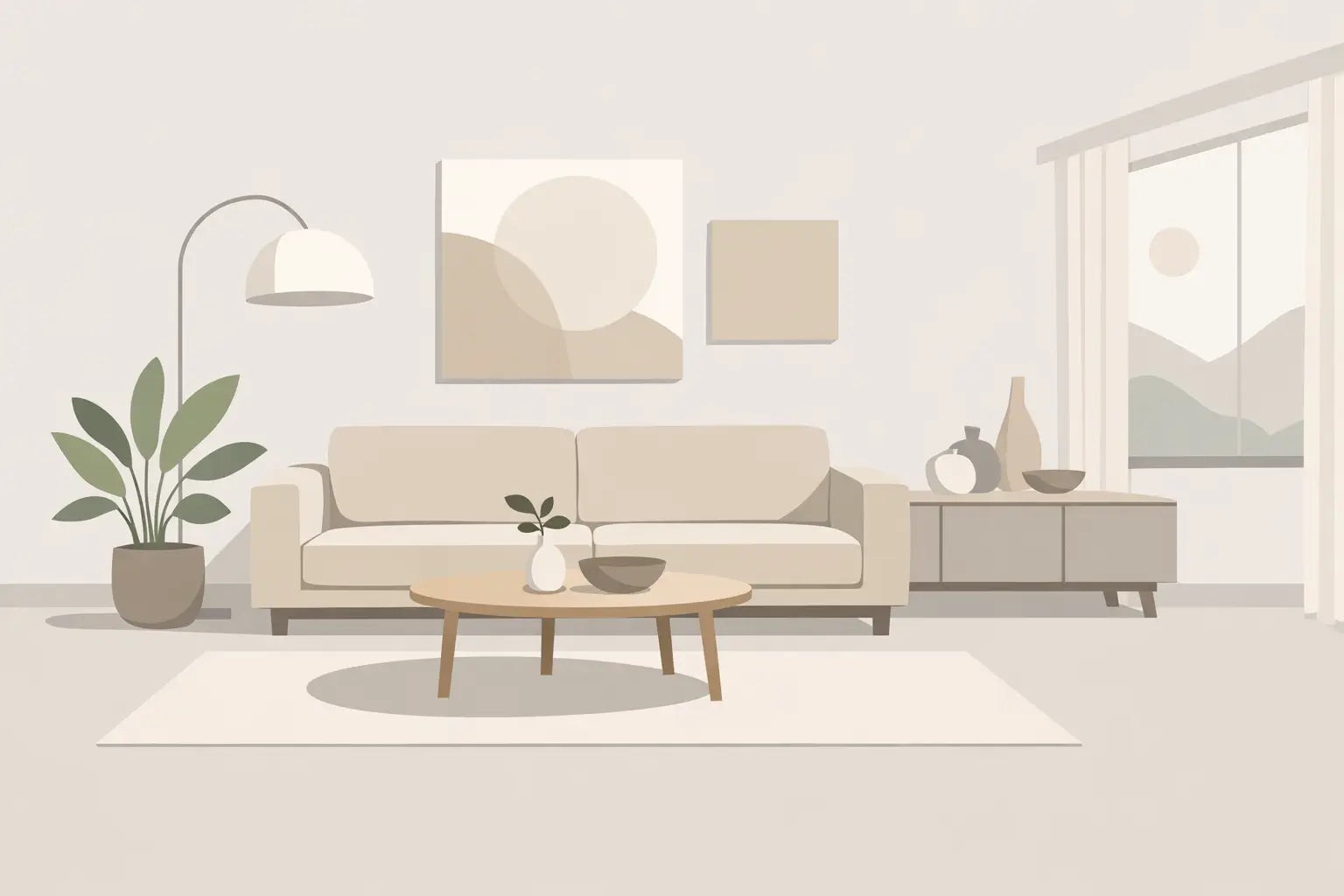
A living room looks cluttered long before it is actually full. One extra basket, a side table that does nothing, cords in plain sight, too many tones fighting for attention - suddenly the whole space feels busier than your schedule.
That is why minimalism works so well here. Not because every room should look bare, but because the living room carries a lot. It is where you land after work, host friends, scroll, snack, read, and reset. Good design should make all of that easier.
The best minimalist decor ideas for living rooms are not about stripping everything out. They are about editing with purpose. Keep what adds comfort. Remove what adds noise. Choose pieces that earn their place.
What minimalist living room decor actually means
Minimalist style gets mistaken for empty space and strict rules. In real homes, it is more practical than that. A minimalist living room is simply a room where each piece has a job, the palette feels controlled, and the visual flow stays clean.
That can look warm and relaxed or sleek and modern. It depends on your home, your routines, and what you want the room to do. A family room with kids will not be styled the same way as a downtown apartment for one, and it should not be.
The goal is not less for the sake of less. The goal is less distraction, better function, and a calmer look.
Start with the biggest visual problem
Before you buy a single new item, look at what is making the room feel crowded. Usually, it is one of three things: too many small objects, furniture that is slightly oversized, or too much contrast between finishes and colors.
This is where people waste money. They shop for decor when the issue is layout. Or they replace the sofa when the real problem is everything around it. Minimalism starts with editing, not adding.
Walk through the room and ask a hard question about each piece. Does it serve the room, or just fill it? If the answer is vague, that piece is probably part of the visual noise.
Minimalist decor ideas for living rooms that feel finished
A minimalist room still needs personality. The difference is that it shows up through fewer, better choices.
1. Use a tight color palette
Start with two or three core tones and repeat them across the room. Think warm white, sand, taupe, black, soft gray, olive, or muted brown. When the palette is controlled, the room feels intentional even if the furniture is simple.
If you love color, use it sparingly and with confidence. One rust chair or one deep green throw can do more than five pastel accents scattered around the room.
2. Choose furniture with visual breathing room
Minimalist spaces benefit from furniture that sits a little lighter. Exposed legs, slimmer arms, clean silhouettes, and lower profiles help the eye move through the room.
That does not mean uncomfortable. A deep sofa can still work beautifully if the lines are simple and the rest of the room stays restrained. Comfort matters. So does proportion.
3. Let one statement piece lead
Trying to make every item interesting is how a room starts to feel chaotic. Pick one anchor. Maybe it is a sculptural floor lamp, a bold coffee table, or one oversized piece of art. Then let everything else support it.
This is one of the smartest minimalist decor ideas for living rooms because it keeps the room memorable without making it busy.
4. Style surfaces with restraint
Your coffee table, console, and shelves do not need a full lineup of objects. In fact, they look stronger with less. Try a small stack of books, one ceramic vase, and a tray instead of ten unrelated accents.
Negative space is doing part of the design work here. Empty space is not unfinished. It is what helps the room feel calm.
5. Hide the practical stuff well
Minimalist rooms fall apart fast when everyday items have nowhere to go. Remotes, chargers, blankets, toys, and mail need a system. Closed storage is your best friend.
Use a media unit with concealed compartments, baskets that match the palette, or an ottoman with hidden storage. The less visual interruption, the stronger the overall look.
Materials matter more than extra decor
When you remove excess styling, texture starts carrying the room. That is a good thing. It makes the space feel layered without relying on clutter.
A linen curtain, a boucle accent chair, a wood side table, a matte ceramic lamp, and a wool rug can create a rich room with very few decorative extras. The trick is contrast with control. Mix soft and structured. Smooth and nubby. Light and grounded.
If everything is the same finish, the room can feel flat. If every finish is different, it can feel random. Minimalism lives in that middle ground.
Lighting is part of the decor
A lot of living rooms are overdecorated and underlit. Then people wonder why the space still feels off.
Minimalist design depends on clean lighting. Natural light helps, but layered lighting matters just as much at night. Aim for a mix of ambient light, a floor lamp or table lamp for softness, and maybe one directional source near a reading chair.
Skip harsh overhead light as the only option. It flattens the room and makes even good styling feel colder than it is.
Choose fixtures with simple lines and strong shapes. A clean lamp can act like sculpture without adding clutter.
How to keep a minimalist living room from feeling cold
This is the trade-off people worry about most, and fairly so. Minimalist spaces can feel sterile when they focus only on reduction. The fix is warmth, not more stuff.
Bring in softness through textiles, natural materials, and a few personal details that actually mean something. A framed black-and-white photo, one beautiful candle, or a hand-thrown bowl can add life without breaking the look.
Plants also help, but keep them edited. One larger plant often works better than several small ones. It adds shape and freshness while keeping the room clean.
If your walls, rug, sofa, and curtains are all bright white, add contrast. Wood tones, oatmeal fabrics, soft greige, or black accents can ground the space fast.
Layout is doing more work than you think
Sometimes the best decor move is moving what you already own.
Pulling furniture away from the wall can make the room feel more deliberate. Swapping a bulky side table for a slimmer one can improve flow. Removing one accent chair may make the whole space feel larger and more expensive.
Minimalism is often about spacing. A room with fewer pieces but better placement will almost always feel stronger than a room full of decent furniture arranged without intention.
Pay attention to walking paths and sight lines. When you enter the room, your eye should not hit a wall of objects. It should move easily.
Smart shopping rules for a minimalist look
If you are buying new pieces, be selective. Precision beats quantity.
Look for decor that solves a need and fits the overall palette. A mirror that reflects light. A storage bench that cuts mess. A rug that anchors the seating area. A tray that corrals loose items. These are upgrades, not filler.
This is also where budget matters. Not every item has to be premium, but the room will look better if you invest in the pieces you touch and notice most, like the sofa, rug, lighting, and storage. Smaller accents can stay simple.
And pause before buying sets. Matching everything can make the room feel flat, while too many one-off impulse buys create clutter in a different form. A curated mix usually wins.
For shoppers who want the edited route, that is the appeal of browsing a tightly filtered home assortment like Zavira - less noise, better choices, and pieces that feel like upgrades instead of placeholders.
A simple formula if you want to reset the room fast
If your living room feels overwhelming, start with this: remove anything decorative that you do not love, keep one clear focal point, simplify the palette, and add back only what improves comfort or function.
Then look at what remains. The room should feel easier to use, easier to clean, and easier on the eyes. That is the real win.
Minimalism is not about proving restraint. It is about making your home feel better to live in. When your living room has space to breathe, you do too.
The best rooms are not packed with more. They are shaped by better choices.
Share:
11 Long-Lasting Home Fragrance Ideas
Why Curated Lifestyle Products Online Win