
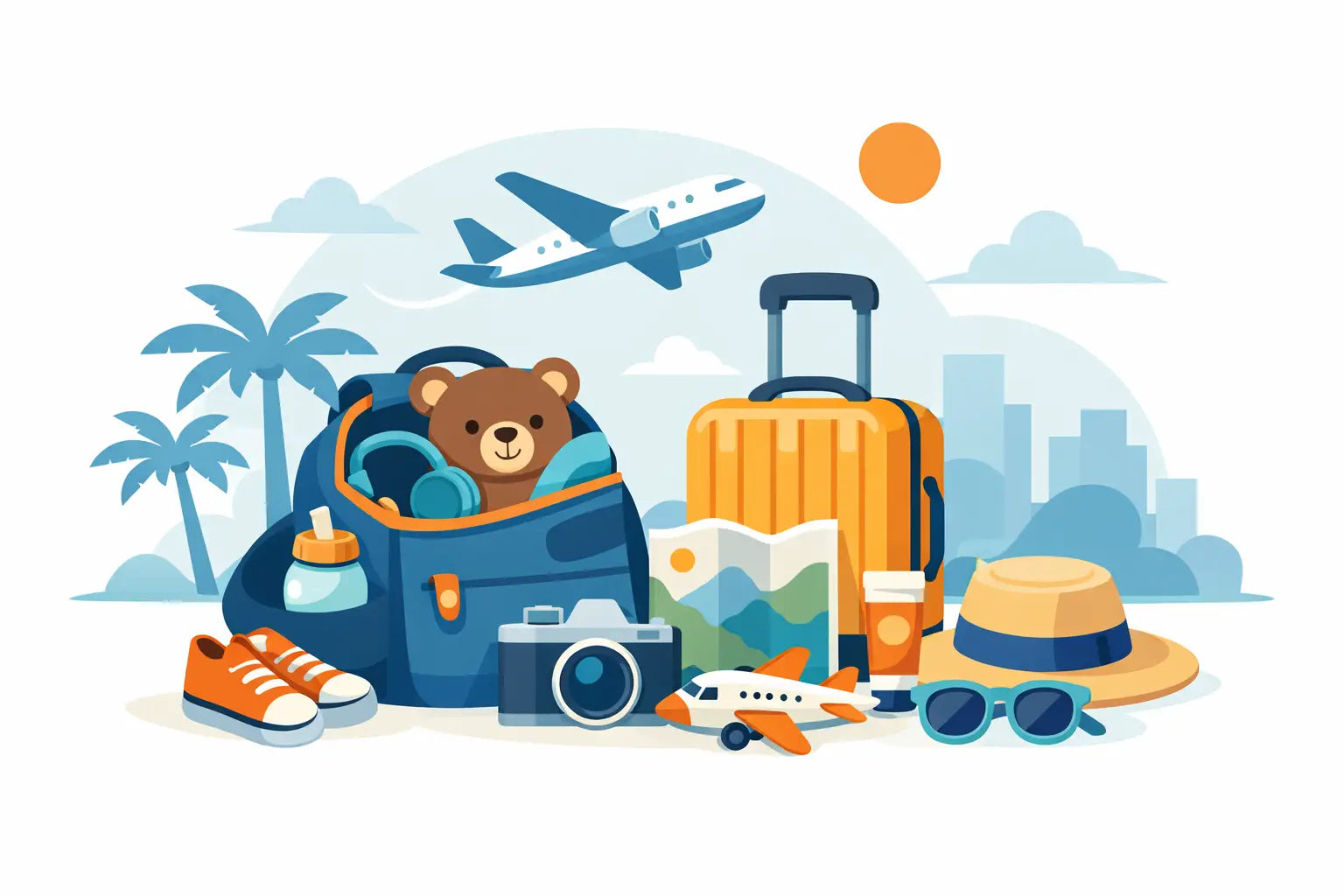
You notice it fastest at the gate, in the back seat, or 20 minutes after leaving home - the one item you did not pack is suddenly the only thing that matters. A real guide to kids travel essentials is not about stuffing a bag with every just-in-case extra. It is about choosing the few things that keep kids comfortable, fed, clean, and calm when plans shift.
That matters because family travel has very little margin for clutter. Parents do not need more stuff. They need the right stuff, packed in the right order, with enough flexibility to handle delays, spills, boredom, and tired moods. Smart packing feels less like preparation and more like damage control avoided.
What belongs in a guide to kids travel essentials
The best packing plan starts with one filter: will this item solve a predictable problem? If the answer is yes, it earns space. If it is bulky, single-use, or easy to replace on the road, it usually does not.
For most families, the core problems are simple. Kids get hungry, tired, messy, bored, cold, and overstimulated. Travel essentials should answer those needs without turning your carry-on into a storage unit. That is the trade-off. Pack too little and you end up scrambling. Pack too much and every transition gets harder.
A good rule is to build around categories, not random items. Think comfort, cleanup, food, entertainment, sleep, and backup clothing. Once those are covered, you can add age-specific extras.
Start with the personal item, not the suitcase
If you are flying, your personal item is the real command center. If you are driving, it is the bag you keep within reach instead of buried in the trunk. This is where the most important kids travel essentials should live.
Keep one full change of clothes for each child in an easy-to-grab pouch. Include underwear, socks, and a lightweight top or onesie depending on age. Spills and accidents rarely happen when it is convenient. The faster you can swap clothes, the less stressful the moment becomes.
Wipes belong here too, even if your child is well past the diaper stage. They handle sticky hands, tray tables, mystery messes, snack residue, and quick bathroom cleanups. Add tissues, a few bandages, and a small sanitizer. Not a huge medicine cabinet - just the basics you will actually reach for.
Then pack one comfort item that your child already loves. Not a new one bought for the trip. Familiar wins. A small blanket, soft toy, pacifier, or sleep companion can do more for a rough travel day than an overdesigned gadget.
Clothing: less variety, more function
Parents often overpack outfits and underpack practical layers. Kids do not need a different look for every leg of the trip. They need clothing that can handle temperature swings, movement, naps, and repeat wear.
Soft layers work better than heavy pieces. Think breathable tops, easy pants or leggings, socks, and one outer layer that can go on and off without a fight. If you are moving between airports, cars, restaurants, and hotels, conditions change fast. Layers keep you from packing for four climates at once.
Shoes should be simple. One reliable pair worn during travel is often enough unless you are heading somewhere with a clear second use case like a beach or pool. Extra shoes take space, and children outgrow patience with hard-to-remove footwear very quickly.
For younger kids, bibs, burp cloths, or backup sleepers may still be worth the space. For older kids, the better move is often one extra top and more attention to stain-resistant, easy-wash basics. It depends on the child and the trip length.
Snacks are not optional
Few things improve family travel faster than well-packed snacks. Hunger can look like boredom, whining, or full collapse, especially when schedules shift. Food is not just fuel here. It is timing, distraction, and mood management.
Choose snacks with low mess and decent staying power. Dry cereal, crackers, fruit pouches, granola bars, pretzels, and cut snacks stored securely tend to travel well. Skip anything that melts, crumbles everywhere, or requires too much assembly in a cramped seat.
It also helps to pack variety without overdoing it. A few familiar choices beat a bag full of novelty. If your child is selective, travel day is not the time to test adventurous options. Reliable wins.
Water matters too, but how you pack it depends on the mode of travel. Refillable bottles are ideal once you are through security or on the road. For toddlers, leak resistance matters more than style. The best bottle is the one that does not soak the spare clothes.
Entertainment that earns its space
A smart guide to kids travel essentials always includes boredom control, but this is where a lot of parents overpack. Too many toys create more mess, more choices, and less actual focus.
Aim for a compact mix: one screen option if that works for your family, one hands-on activity, and one comfort-based distraction such as stickers, coloring, or a favorite small toy. Headphones sized for kids are worth packing if you use a tablet or audio content. Without them, even good entertainment can turn into a problem.
For babies, entertainment is usually tactile and interactive. A teether, soft book, clip-on toy, or sensory item often works better than trying to create a full play kit. For preschoolers, repetition helps. They may watch the same show or do the same sticker book longer than you expect. For school-age kids, autonomy matters more. Letting them help choose a few travel items can reduce complaints later.
The goal is not endless stimulation. It is strategic distraction during transitions, delays, and wait times.
Sleep and comfort essentials matter more than you think
Travel changes sleep routines fast, and tired kids rarely adapt with grace. That is why sleep support deserves space in your bag, even on short trips.
Start with what your child already associates with rest. A familiar blanket, sleep sack, pacifier, white noise source, or bedtime book can create continuity when the setting changes. You do not need to rebuild the whole nursery or bedroom away from home. You just need a few recognizable signals.
Temperature is another common miss. Airplanes run cool, cars can shift from warm to chilly, and hotel rooms are unpredictable. One extra layer, comfortable socks, and a lightweight blanket often solve more than parents expect.
If your child is sensitive to light or noise, small adjustments can help. It might be a cap, a hood, child-safe headphones, or simply better seat positioning. The point is not perfection. It is fewer friction points.
Don’t forget the parent-facing essentials for kids
Some of the most useful travel items are not for children to use directly. They help parents stay organized enough to respond quickly.
A simple pouch system works better than one bottomless diaper bag or tote. Keep snacks in one pouch, cleanup items in another, and clothing in a third. When you need something fast, you should not have to unload the entire bag into an airport chair.
Wet bags or resealable storage bags are worth packing for dirty clothes, damp items, trash, or half-eaten snacks. They are not glamorous, but they solve a lot. The same goes for a compact folding changing pad if you are traveling with a baby.
If your child takes medication, pack it in your reachable bag, not checked luggage. Add any dosing tool you may need. This sounds obvious until you are tired, rushed, and assuming you packed it somewhere else.
How to adjust your kids travel essentials by age
Babies need the most gear, but not necessarily the most variety. Focus on feeding, diapering, backup clothing, and sleep cues. Toddlers need movement breaks, snacks, spill protection, and familiar comfort items. Preschoolers need routine support and boredom solutions. School-age kids need less physical maintenance but more engagement, independence, and a few personal choices.
Trip length changes the equation too. For a quick weekend, you can often wash and rewear basics. For longer travel, laundry access matters more than packing double. The same goes for destination. A beach trip, city break, and holiday visit do not demand the same setup.
That is the real secret: the best essentials are not the most items. They are the most useful ones for your child, your route, and your tolerance for carrying extra weight.
Pack for the hard moments, not the ideal itinerary
It is easy to pack for the vacation you hope to have. It is smarter to pack for the moments that usually go sideways. A delay. A missed nap. A juice spill. A child who suddenly hates the snack they loved yesterday.
That mindset keeps your bag focused. Choose practical over precious. Choose familiar over trendy. Choose items that do more than one job when possible. That is very much the Zavira approach - better picks, less clutter.
When your packing list gets simpler, travel often gets lighter too. And lighter is not just about weight. It is about fewer decisions, fewer meltdowns, and more room to enjoy where you are going.
Share:
Kids Footwear That Actually Fits Daily Life
25 Smart Gifts for Her That Feel Elevated