
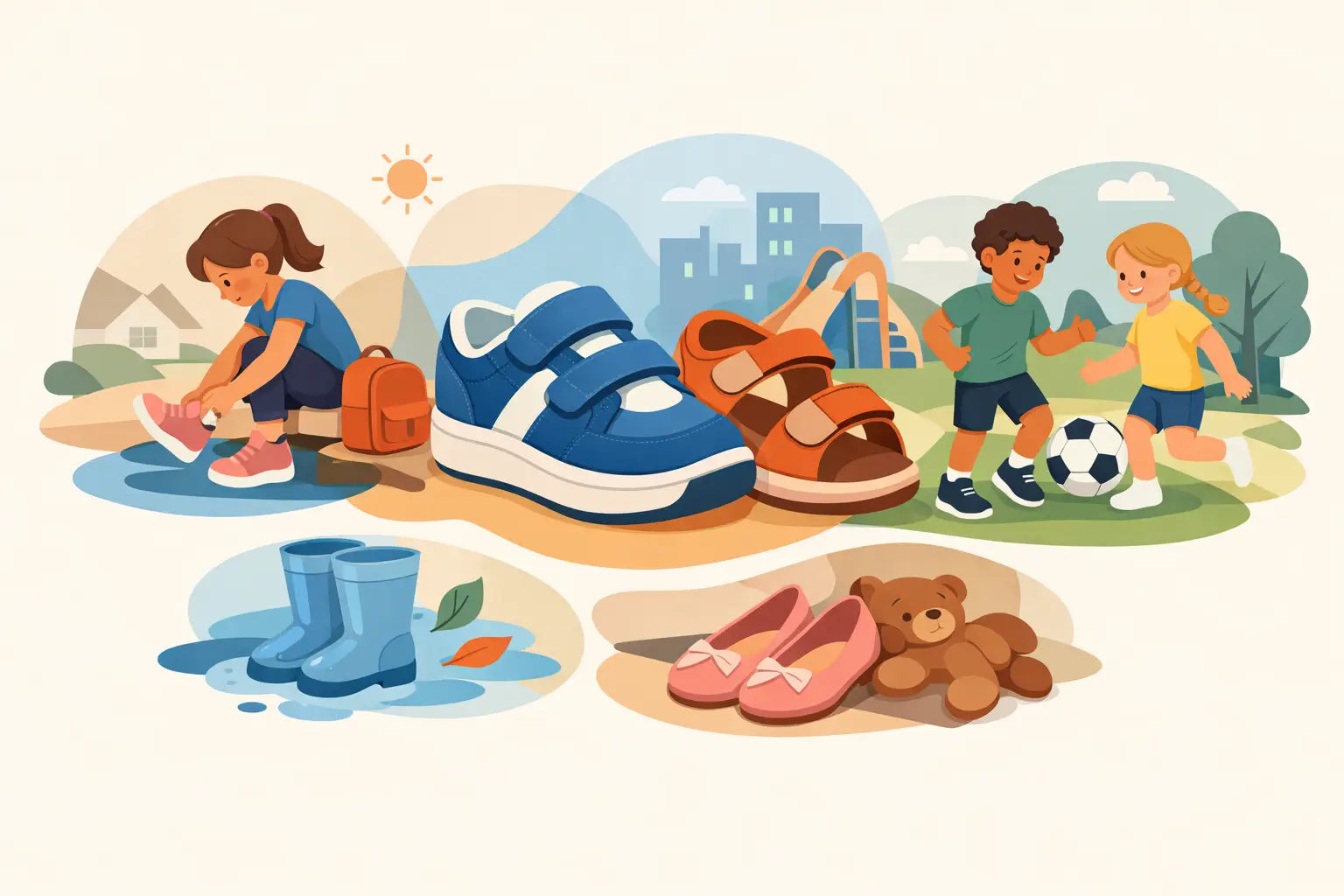
The fastest way to waste money on kids footwear is to shop by looks alone. The cutest pair in the cart means very little if it slips at the heel, pinches at the toe, or falls apart halfway through the month. Parents do not need more options. They need better ones.
That is the real job of kids footwear - to keep up with motion, mess, growth spurts, and everyday life without turning a simple purchase into a research project. A good pair should feel easy from the first wear, hold up through repeat use, and make getting out the door one step simpler.
What good kids footwear really needs to do
Style matters, but function decides whether shoes earn their place. Kids walk, run, drag their toes, jump off curbs, and forget to untie things properly. Their shoes have to work harder than most adult pairs, which means the right choice is rarely about trends alone.
Fit comes first. There should be enough room at the front for toes to move, but not so much that the foot slides around. Too tight, and comfort disappears quickly. Too loose, and stability drops. Both can turn an everyday shoe into one that gets avoided.
Support matters too, but not in an overbuilt, stiff way for every child. Some kids do well in lightweight flexible sneakers, while others need a more structured sole for all-day wear. It depends on age, activity level, and how the shoe will be used. A preschooler who spends half the day on playground equipment needs something different from a grade-schooler wearing the same pair for class, recess, and after-school errands.
Durability is where many purchases win or lose. Reinforced toes, secure closures, and soles with actual grip go much further than flashy design details. If a shoe cannot handle daily repetition, it is not a smart buy no matter how good the price looks.
How to choose kids footwear without overthinking it
A simple filter works better than endless comparison. Start with routine. Is this pair for school every day, sports practice, family outings, or occasional dress-up? One shoe rarely covers everything well, and forcing it usually leads to faster wear or more complaints.
Next, look at closure. Velcro is fast and parent-friendly, especially for younger kids or rushed mornings. Slip-ons save time, but only if they stay secure. Laces can offer a more adjustable fit, but they are only practical if the child can manage them or if you do not mind tying them often. Convenience is not a bonus feature here. It is part of what makes a pair usable.
Then check the sole. A flexible sole is usually better for younger children who need natural movement. Older kids may benefit from something slightly sturdier, especially if the shoes need to handle long school days and outdoor play. The goal is balance - movement without flimsiness, structure without stiffness.
Material matters more than many shoppers think. Breathable uppers help with comfort, especially in warmer weather or on active days. Easy-clean finishes are worth it when spills, grass stains, and playground dust are part of the weekly routine. Soft interiors help prevent rubbing, but if the exterior is too delicate, the shoe may still fail too soon.
The biggest mistakes parents make when buying kids footwear
One common mistake is buying too far ahead in size. It is tempting, especially when children grow quickly, but extra room does not always equal better value. Shoes that are too large can affect stability, cause tripping, and make kids less likely to wear them. A little growth room is practical. A full-size jump often is not.
Another mistake is choosing based on one moment instead of the whole week. A dressy pair may look perfect for an event, but if it only works for two hours before the complaints start, it has limited value. The better buy is often the one that can move across more than one setting without sacrificing comfort or style.
Parents also tend to underestimate how hard children are on shoes. Thin soles, weak stitching, and decorative finishes can look fine online but wear down fast in real life. Smart shopping means looking past the first impression and asking whether the pair is built for repeated use.
And then there is the hand-me-down question. Sometimes it works, sometimes it does not. If a pair is still in strong condition and has kept its shape, it may be useful for light wear. But shoes molded heavily to one child’s foot or worn down unevenly are not always the best choice for another. Saving money matters. So does comfort.
Best types of kids footwear for different routines
Sneakers do most of the heavy lifting. They are usually the best everyday option because they handle school, errands, and active play with the least compromise. A well-made sneaker with decent grip, breathable material, and secure fastening tends to cover the most ground.
Sandals are useful in warm weather, but only the right kind. Pairs with heel support and adjustable straps tend to stay on better than loose slide styles. For quick pool trips or short casual wear, easy slip-on sandals can make sense. For walking-heavy days, they are often not enough.
Boots are practical in cold or wet conditions, but bulk matters. A boot that is waterproof but too stiff or heavy may frustrate younger kids. The best options keep weather out without making walking feel like work.
Dress shoes should not feel like punishment. Parents often assume formal means less comfortable, but there are polished options that still prioritize movement and softer interiors. If the shoe is for a special event, it still needs to last through standing, walking, and the inevitable running that happens once the formal photos are over.
At Zavira, the smartest approach is curation over clutter. That mindset works especially well for kids. A small rotation of dependable pairs usually does more than a crowded shoe lineup full of near-duplicates.
What fit should feel like
Children do not always explain discomfort clearly. Instead of saying a shoe feels tight, they may avoid putting it on, kick it off in the car, or suddenly prefer older worn pairs. That is why fit checks matter even after purchase.
The toe area should allow wiggle room without looking oversized. The heel should stay in place while walking. The top of the foot should feel secure, not squeezed. If a child’s foot leaves red marks after short wear, that is a sign to reassess.
It also helps to shop with timing in mind. Feet can swell slightly later in the day, especially after activity, so a pair that fits in the morning may feel different by evening. Trying shoes after some movement gives a more realistic sense of daily comfort.
Socks change fit too. Thick athletic socks and thin casual socks can create very different results in the same pair. If the shoes are meant for school or sports, test them in the type of socks the child will actually wear.
When price is worth paying - and when it is not
Not every expensive shoe is better, and not every budget pair is a compromise. The smarter question is where the value sits. If a child needs one main everyday pair, that is usually where spending a bit more makes sense. Better construction, better comfort, and better wear can reduce the cost-per-use quickly.
For occasional shoes, it depends. If a pair is only for a holiday event or a narrow seasonal need, a lower price point may be perfectly reasonable. The key is not to overspend on limited use or underspend on a pair that will take a daily beating.
It is also worth thinking beyond the product page. Easy returns, a clear shopping path, and a well-edited assortment save time, which matters just as much for busy parents as a small price difference. Shopping should feel efficient, not endless.
The smarter way to build a kids shoe rotation
Most families do not need a huge collection. They need a few reliable choices that cover real life. One everyday sneaker, one weather-specific option, and one dressier or occasion pair is enough for many kids. Add a sandal when the climate calls for it, and the lineup is set.
That approach keeps closets cleaner, decision-making faster, and spending more intentional. It also makes it easier to replace what is actually worn instead of buying around random sales or one-off trends.
The best kids footwear does not ask for constant second-guessing. It fits the child, matches the routine, and earns repeat wear without drama. That is the upgrade worth making - fewer misses, better choices, and shoes that work as hard as the day ahead.
Share:
How to Choose a Baby Room Night Light
Guide to Kids Travel Essentials That Work