
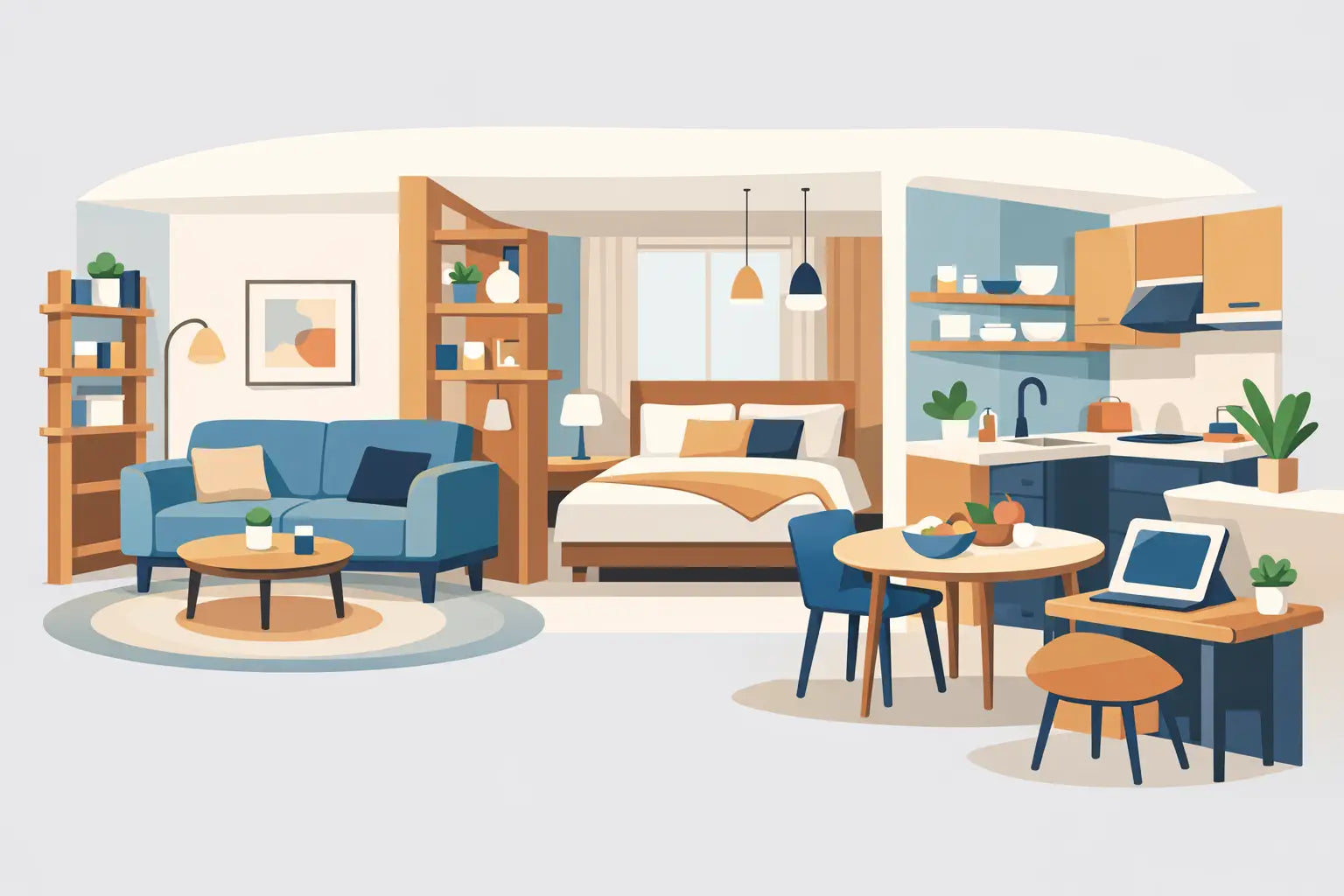
One room changes everything. When your living room is also your bedroom, dining area, office, and drop zone, every piece has to earn its place. That is exactly why learning how to furnish studio apartments is less about filling space and more about editing it with purpose.
A good studio does not need more furniture. It needs better choices. The right setup can make a small apartment feel open, calm, and functional. The wrong one makes it feel crowded by day one. Smart furnishing starts with one rule: buy for the way you live, not for the fantasy version of your floor plan.
How to furnish studio apartments without overcrowding
Start with the layout before you shop. In a studio, placement matters as much as the furniture itself. Measure the room, note window placement, track outlet locations, and pay attention to natural walking paths. If you block movement, the whole apartment feels smaller.
Think in zones, not rooms. You are not trying to force a traditional one-bedroom layout into a single open space. You are creating clear areas for sleeping, lounging, eating, and working, even if some of them overlap. A rug under the sofa, a slim console behind it, or a bookshelf used as a divider can signal boundaries without closing the apartment in.
This is where many people overbuy. They see one open room and assume they need a full living room set, a bed frame, a dining set, and a desk. Usually, that is too much. A studio works best when each piece covers more than one need.
Start with the anchor pieces
The biggest items shape everything else, so choose them first. For most studios, that means the bed, seating, and storage.
Your bed will take up visual and physical space no matter what, so be strategic. A low-profile bed frame can make ceilings feel taller. A platform bed with built-in drawers adds storage without adding furniture. If you host often or want more separation between sleep and living space, a daybed or sleeper sofa can work well. But it depends on your habits. If making up a bed every morning sounds annoying after a week, a real bed is the better call.
For seating, avoid oversized sectionals and bulky recliners. A compact sofa with clean lines usually wins. Apartment-size sofas, armless chairs, and benches with hidden storage offer flexibility without visual weight. If you rarely entertain, two lightweight accent chairs may make more sense than one large couch.
Storage should be vertical whenever possible. Tall bookcases, narrow cabinets, wall shelves, and over-the-door organizers make use of height instead of eating up floor space. In a studio, floor area is premium. Use it carefully.
Choose furniture that works harder
If you remember one thing about how to furnish studio apartments, make it this: single-purpose furniture is a luxury small spaces cannot always afford.
A coffee table that lifts for dining or laptop use can replace a separate desk in some setups. An ottoman with storage can hide blankets, books, or workout gear. Nesting tables are useful because they expand when needed and tuck away when not. A dining table with drop leaves gives you everyday flexibility without committing to a large footprint.
That does not mean every piece has to transform into three other things. Too many moving parts can become its own kind of clutter. The goal is practical versatility, not gimmicks. Choose two or three hardworking pieces that solve your biggest problems.
Keep the scale clean and consistent
Small apartments punish furniture that is too big, but they also suffer from pieces that are too tiny and scattered. A room filled with undersized furniture can look choppy and unfinished. Balance matters.
Look for streamlined silhouettes, exposed legs, and furniture that lets light move through the room. Glass, acrylic, and open-frame pieces can visually lighten a layout. So can furniture raised off the floor. It gives the eye more room to travel, which makes the apartment feel less compressed.
Color also helps. Lighter woods, soft neutrals, and a restrained palette create a calmer backdrop. That does not mean your studio has to be beige. It means fewer competing finishes usually look more intentional. One black metal frame, one oak tone, and one accent color can feel sharp. Five wood tones and three loud prints usually feel accidental.
Create separation without closing the room
Privacy is one of the hardest parts of studio living. The answer is not always a wall. Often, it is a visual cue.
A bookshelf with open backing can divide a sleeping area from a living area while still letting light pass through. Curtains mounted from the ceiling can soften a bed zone and add flexibility. A folding screen is useful if you want something temporary or renter-friendly. Even changing the direction of your bed or sofa can create a sense of separation.
Be careful not to divide the apartment so much that it starts feeling boxed in. Every partition comes with a trade-off. More privacy can mean less light, less openness, and fewer layout options. If the studio is already tight, subtle zoning often works better than hard separation.
Make storage part of the design
Clutter hits harder in a studio because there is nowhere for it to hide. Good storage is not optional. It is part of the look.
Closed storage creates instant calm. Baskets, lidded bins, storage benches, and cabinets keep everyday items from turning into visual noise. Open shelving can look great, but only if you are disciplined. If not, use it for a few edited decor pieces and rely on closed storage for everything less attractive.
Entryway storage matters more than people think. Even a slim shoe cabinet, wall hooks, or a small tray for keys can stop the front door area from becoming a pileup. The same goes for the kitchen. Countertop appliances, duplicate tools, and oversized dish racks can make a studio feel crowded fast. Keep only what you use often and store the rest.
Don’t skip lighting and mirrors
Overhead lighting alone rarely does a studio any favors. It flattens the room and can make the space feel smaller at night. Layered lighting changes that.
A floor lamp near the sofa, a table lamp on a nightstand, and under-cabinet kitchen lighting can create depth and make each zone feel intentional. Warm bulbs usually make a studio feel more inviting than harsh cool light.
Mirrors are another small-space advantage when used well. A large mirror across from a window can bounce light and visually expand the room. But avoid adding mirrors just to follow a rule. If the reflection shows clutter, it doubles the problem.
Leave room for real life
A furnished studio should still feel breathable. That means resisting the urge to fill every corner. Empty space is not wasted space. It is what makes the apartment usable.
Leave enough clearance to walk comfortably around the bed and between major pieces. Make sure drawers can open fully. Test whether a dining chair can pull out without hitting the sofa. These details sound small until daily life starts feeling awkward.
This is also why buying in sets is rarely the best move for a studio. Matching bedroom furniture, matching living room furniture, matching side tables - it adds up quickly and can make the apartment feel rigid. A more edited mix tends to work better. Zavira’s point of view fits here: no clutter, no compromises.
How to furnish studio apartments on a real budget
A smart studio does not require a huge spend. It requires priorities. Invest first in the pieces you use every day, especially your mattress, primary seating, and storage. Those have the biggest impact on comfort and function.
Save on trend-driven decor, side tables, and accessories you can add later. If the budget is tight, furnish in layers. Start with the essentials that define your zones, then add lighting, textiles, and accent pieces over time. A studio assembled too quickly often ends up with filler furniture that needs replacing.
Bundles can help if they are genuinely useful, but only buy coordinated pieces when they solve a specific need. Smart shopping is less about getting more and more about getting it right the first time.
The best studio apartments feel edited, not crowded. They support your routine, hide the mess, and make one room do more without looking like it is trying too hard. If a piece is stylish but adds friction, skip it. Small-space living gets better fast when every choice has a job.
يشارك:
10 Work Outfit Essentials for Women
Men Accessories That Upgrade Everyday Style